
Düsseldorf City Trip: More Than Just Beer and Pretzels (+ Practical Tips)
A Surprising City Break: Düsseldorf Beyond the Classics
Craving a city trip that doesn’t require a long-haul flight? Put Düsseldorf on your list. Over the course of two days, I discovered a city that is as versatile as it is unexpected—a place where art, fashion, architecture, and great food blend seamlessly. And yes, there was beer too.
It’s a classic case of me being proven wrong. I often claim I’m not the biggest fan of Germany, but every time I visit, I’m surprised by how inventive and genuinely cool our neighbors actually are. I’ve watched the sky light up during the annual fireworks festival in Hannover while sipping cocktails on a rooftop bar. I’ve explored abandoned factories in the Ruhr area at night, discovering a modern open-air pool hidden between rusted steel and iron.
And now, there was Düsseldorf, the capital of North Rhine-Westphalia, just a short train ride away. Forget any dusty image of just sausages and lager. Today, Düsseldorf is where you’ll find some of the best ramen in Europe in Little Tokyo and gaze at futuristic architecture in the Medienhafen. It’s a city that doesn’t try too hard to be hip; it just is. verrassend hippe citytrip vlakbij
What to Do in Düsseldorf: 6 Must-Visit Locations
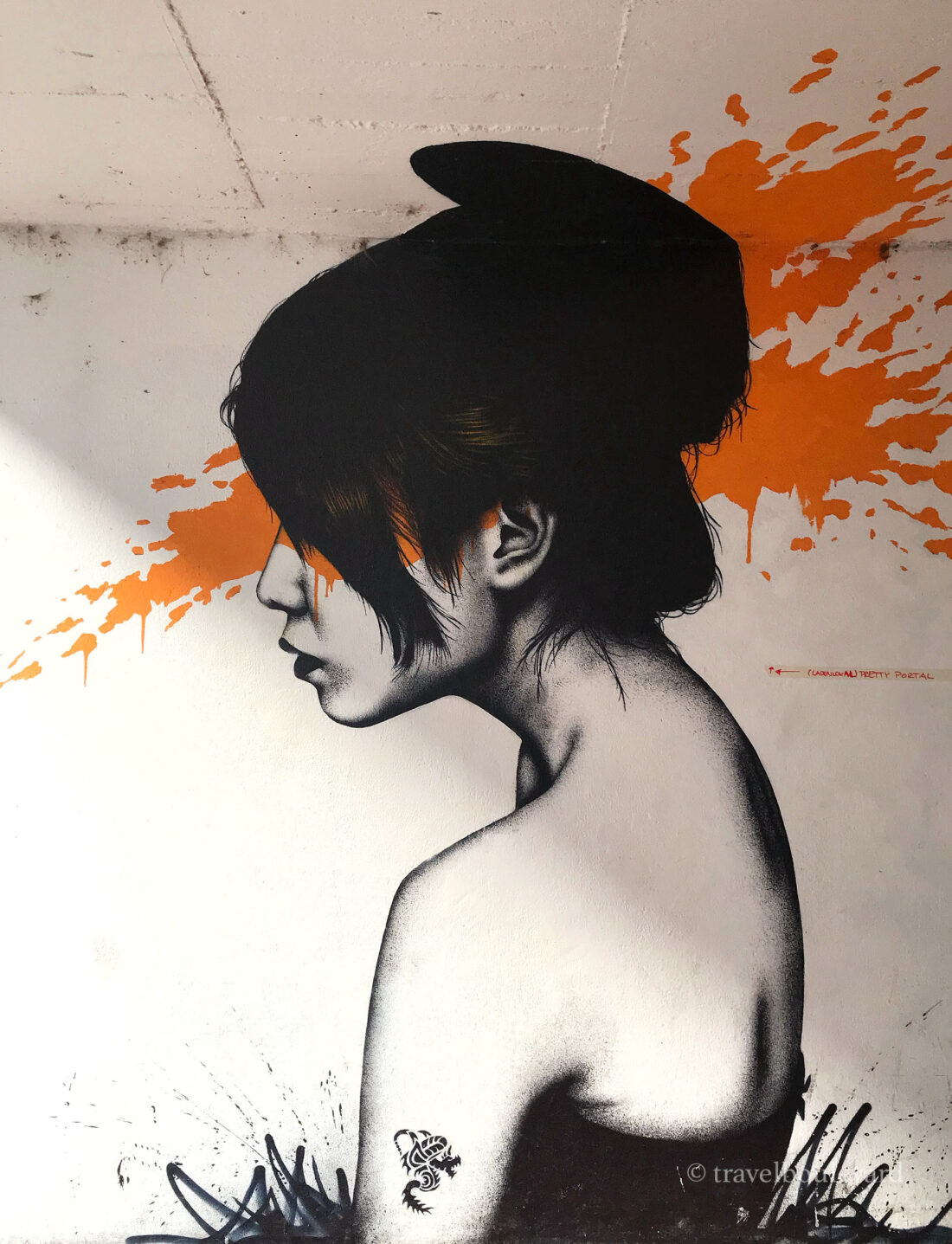
1. Street Art: The City as an Open-Air Gallery
Düsseldorf breathes art. Famed director Wim Wenders hails from here, electronic pioneers like Kraftwerk and Propaganda found their sound in this city, and big names like Joseph Beuys and Gerhard Richter learned their craft at the renowned Düsseldorf Academy of Arts. Add dozens of museums and over a hundred art galleries to the mix, and it’s safe to say this is one seriously artistic city.

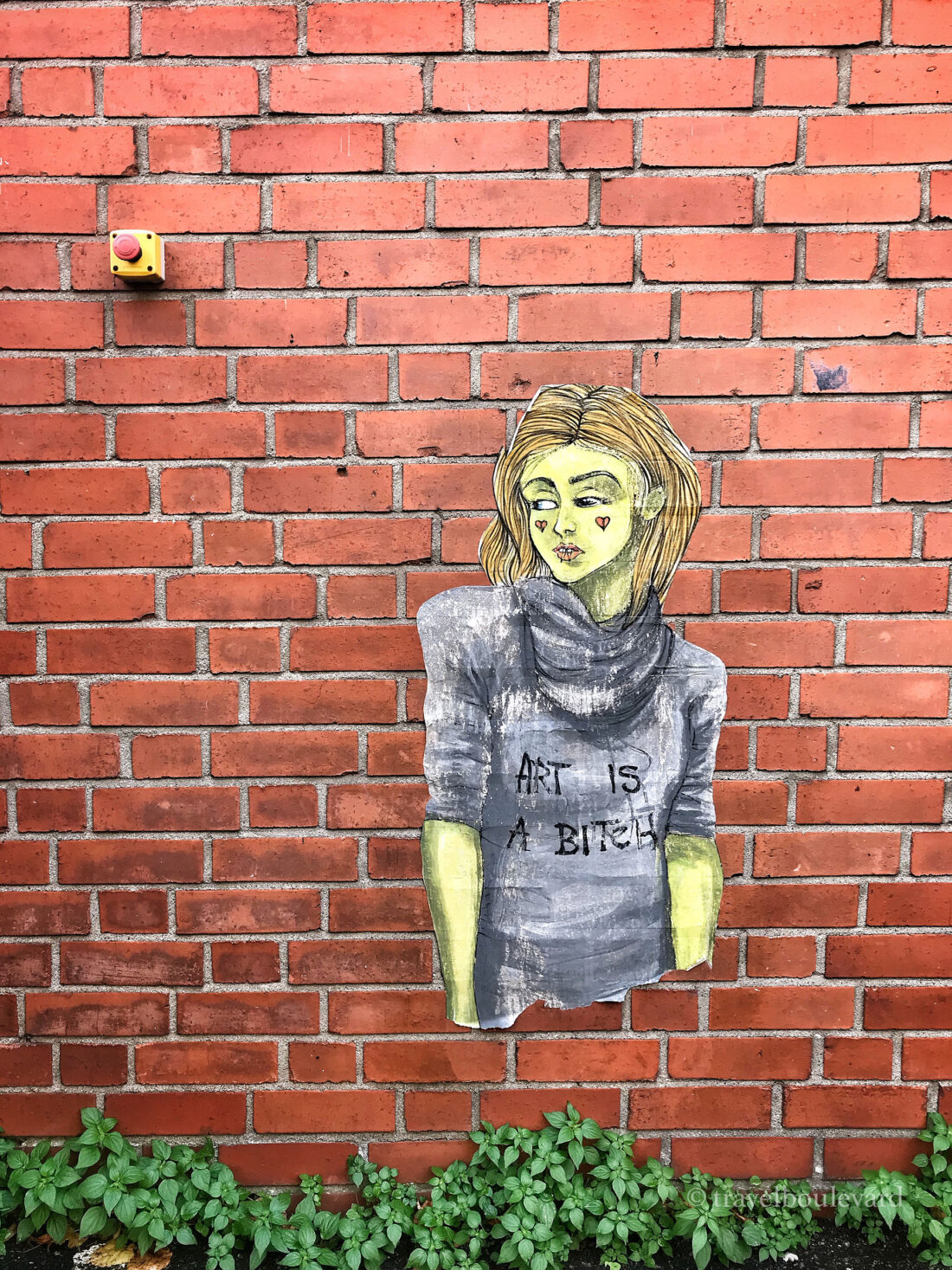
Our guide through this urban art explosion is Klaus Rosskothen, owner of the Pretty Portal art gallery in Brunnenstrasse. Urban art, he explains, is a blend of pop, punk, modern art, and classic styles. During our walk, we realize just how vibrant Düsseldorf’s street art scene really is. Entire facades are covered in towering murals—some by individual artists, others by collectives. Some works offer sharp social commentary, while others simply make you smile, giving the grey streetscape a much-needed injection of humor.
In Düsseldorf, art is everywhere if you just step outside:
- Kiefernstrasse (Flingern-Süd): The most iconic spot in the city where street art literally takes over the neighborhood. Every single house here is a work of art in its own right.
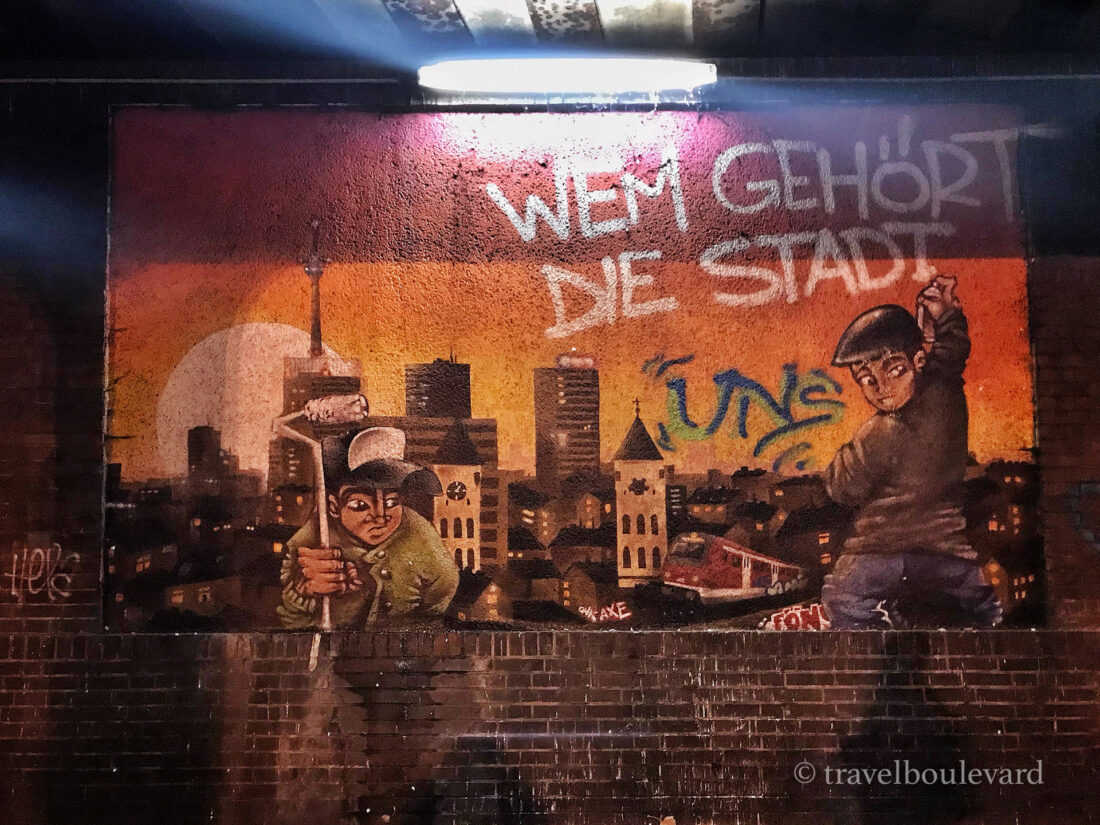
- Mintropplatz: A hundred-meter-long railway tunnel completely covered in street art. In 2011, the collective Arbfieber took over the space, with over forty artists transforming it into a public gallery in just 24 hours. Their underlying message? “Wem gehört die Stadt?” (Who does the city belong to?). Since the tunnel is constantly updated with new works, there is always something fresh to discover.
- The Metro (Wehrhahn line): Even underground, the art doesn’t stop. The six stations are decorated with installations by various artists, making them feel more like a futuristic museum than a subway stop.
My tip: Pay attention to the details. While I initially thought I was looking at ordinary stickers or flyers, our guide pointed out tiny Pac-Man figures on street signs. These are the works of the anonymous artist Pdot. His mission? To get people to look away from their smartphones and start noticing the city again. For me, it worked instantly—I found myself hunting for as many of these little figures as possible. It’s almost as addictive as Pokémon.




2. The Longest Bar in the World: Altstadt Etiquette
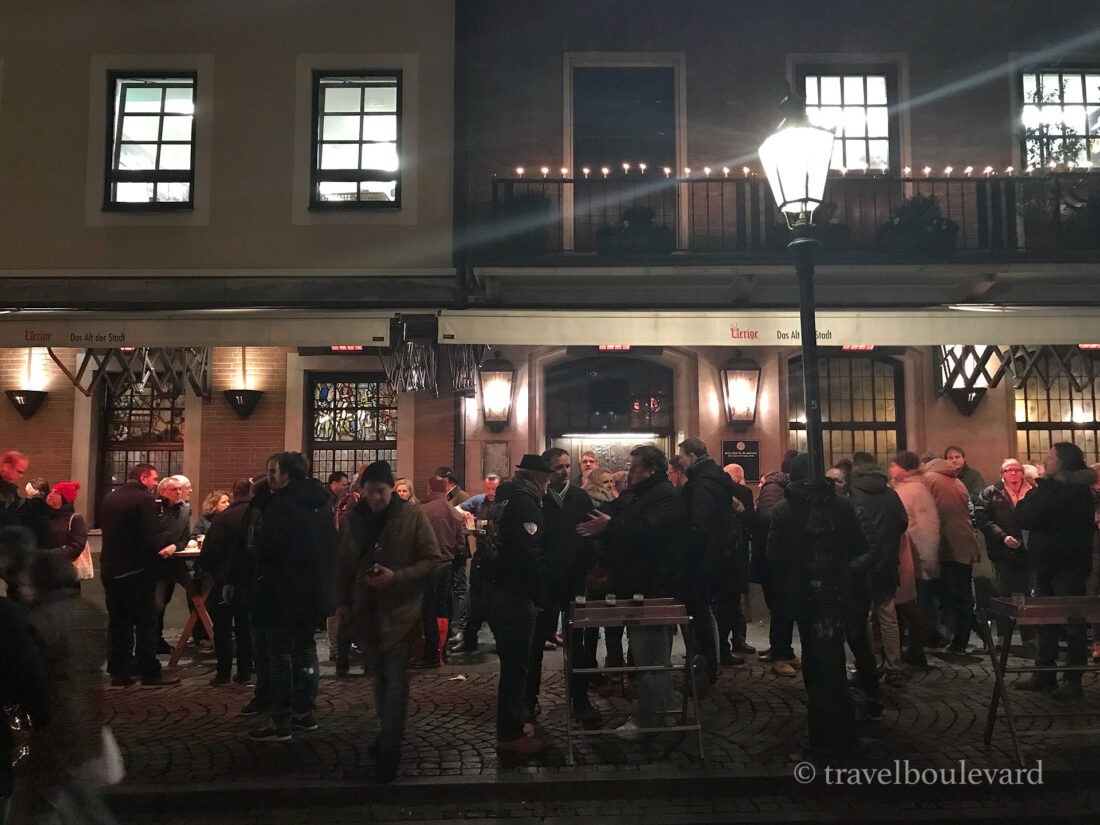
Did all that street art make you thirsty? Then head over to the Altstadt—the historic city center and the beating heart of Düsseldorf. This area is famously known as the “longest bar in the world,” and the name is well-deserved: you’ll find more than 300 bars, breweries, and nightclubs packed side by side. What stands out most is the indestructible terrace culture; locals prefer to drink their beer outside on the street, regardless of what the weather forecast says.
-> The Art of Altbier
The undisputed star of the Altstadt is Altbier, a top-fermented, amber-colored brew. We headed into the microbrewery Kürzer in the Kurze Straße. This is the place where traditional brewing meets a hip, young crowd. The atmosphere is bustling and unpolished: you’re literally standing shoulder-to-shoulder with locals at the bar, and the beer flows at a pace that only an experienced Köbes (waiter) can keep up with.
-> The Golden Rules of the Köbes
If you find a seat in a traditional brewery, you need to know the unwritten etiquette to avoid standing out like a clueless tourist:
The Stop Signal: Had enough? Place your beer coaster (the Bierdeckel) on top of your glass. This is the only way to stop the flow of beer and signal that you’re ready for the bill—which is the sum of all those tally marks on your coaster.
The Automatic Refill: The waiter will keep bringing fresh glasses of Altbier as soon as yours is nearly empty. He simply swaps your glass for a full one and adds another tally mark to your coaster. No need to wave him down; it’s a well-oiled machine.
-> More Than Just Beer: The Cocktail Scene
If you’ve had your fill of the breweries, you’ll be happy to know that Düsseldorf’s cocktail scene has gained serious international recognition.
Bar Beuys: Named after the iconic artist Joseph Beuys, this spot serves creative cocktails in a relaxed, artistic setting. It’s the perfect place to end your evening in style, away from the boisterous energy of the beer cellars.
Melody Bar: This tiny, hidden gem in the Altstadt is more popular than ever. My advice? Get there early. The few bar stools fill up incredibly fast. It’s unpretentious, intimate, and the quality of the drinks is world-class.
3. Petit Paris: Fashion, Libeskind, and Europe’s Greenest Facade
The next morning, after shaking off the remnants of the previous night’s German beer, it’s time for a walk past the city’s architectural landmarks. Düsseldorf isn’t called “Petit Paris” for nothing. While Napoleon likely coined the nickname based on the city’s elegant buildings, today that grandeur is mostly reflected in luxury fashion boutiques and bold, modern designs.
-> Shopping and People-Watching on the Kö
Our first stop is the luxurious Königsallee, affectionately known by locals as “the Kö.” This is the realm of the golden credit cards: luxury brands like Gucci, Chanel, and Prada beckon from glittering shop windows along the stately canal. Even if you don’t plan on spending a fortune, it’s a fantastic spot to grab a bench and watch the parade of fashion-forward residents pass by.
-> Architectural Statements: From Libeskind to Hornbeams
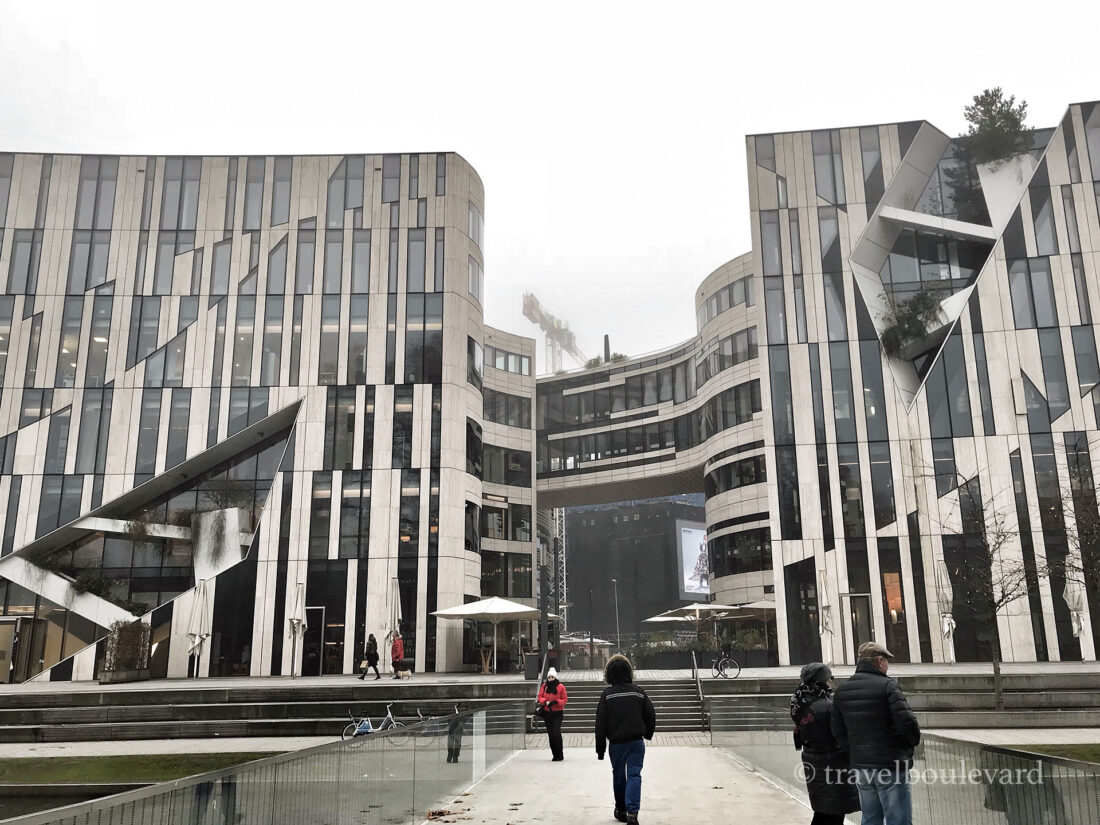
An extension of the Kö brings you to the spectacular Kö-Bogen, designed by star architect Daniel Libeskind. It’s a sleek, modern complex filled with offices and high-end stores like Apple and Breuninger. But the true showstopper stands right next to it:
- Kö-Bogen II: This building boasts the greenest facade in Europe. It features no less than eight kilometers of hornbeam hedges (roughly 30,000 plants). The living wall is now fully established, which isn’t just an impressive sight; it also noticeably improves the city’s microclimate.
- Schadowstraße: Looking to shop without the luxury price tags? The adjacent Schadowstraße has been transformed into a pedestrian-friendly, green boulevard. It’s the perfect mix of major international chains and smaller boutiques.
4. Catching a Breeze Along the Banks of the Rhine
We continue our walk along the banks of the Rhine. On sunny days, the pedestrianized Rhine Embankment Promenadeis where the city comes alive. This kilometers-long route connects the Altstadt with the modern Medienhafen. You’ll see walkers, skaters, and people simply enjoying the sun on the steps by the water. It’s the ideal spot to slow down and experience the city from the water’s edge.
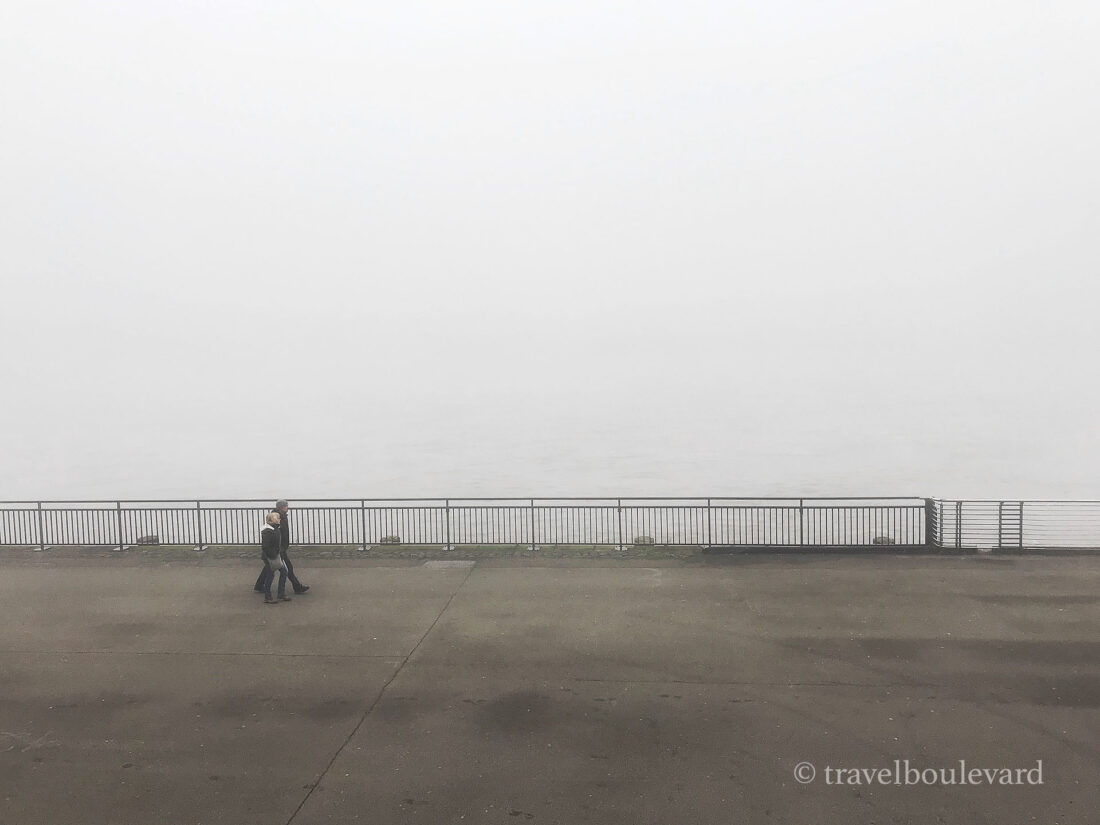
During our visit, a dense fog meant we could barely see a thing, though that had its own mysterious charm. The city’s contours loomed faintly in the distance, giving the skyline an almost cinematic feel. Fog or sun: the promenade remains a great place to slow down and experience the city from the water’s edge.
5. Architecture in the Medienhafen: The Dance of Frank Gehry
After a thirty-minute walk, we reach the trendy Medienhafen district. Where old warehouses once stood, hyper-modern architecture now dominates the skyline. The literal high point is the Rheinturm, a towering radio and television mast. An elevator whisks you up to the observation deck at nearly two hundred meters for a panorama over the city and the winding Rhine. On a clear day, the views are endless, but even in grey weather, it’s an impressive spot to get a sense of the city’s scale.
A cool detail: The lights on the side of the tower form the largest digital clock in the world. It takes a moment to figure out exactly how to read the decimals, but once you crack the code, it’s a clever piece of engineering that keeps you watching.
This district is home to many media companies and offices, but it’s the architecture that truly steals the show. The most famous complex is undoubtedly the Neuer Zollhof by Frank Gehry, easily recognized by its undulating, almost dancing asymmetrical shapes. The three contrasting buildings—each using different materials and colors—form a sculptural skyline along the water as part of the Art and Media Center.
6. Sushi and Ramen: Welcome to Little Tokyo
Before catching the train back home, we dive into what might be the city’s most surprising neighborhood: Little Tokyo. Düsseldorf is home to one of the largest Japanese communities in Europe. With many Japanese companies headquartered here, the result is a district so authentic you’ll temporarily forget you’re in Germany.
In the area around Immermannstraße, you won’t find watered-down tourist versions of Asian cuisine, but the real deal:
- Gastronomy: From excellent sushi restaurants to ramen bars where the queue at the door (like at Takumi) is the ultimate proof of quality. It’s the perfect alternative if you’ve had your fill of German bratwurst.
- The Vibe: Stroll through the streets while sipping bubble tea, browse through manga shops, or explore a Japanese supermarket. It feels like a mini-vacation within your city trip.
Planning Your Trip: Choose Your 2 or 4-Day Route
Whether you’re in town for a quick hit of culture or have the luxury of a long, lazy weekend, these itineraries help you navigate the city like a pro. We’ve balanced the big hitters with those hidden local spots that usually stay under the radar.
-> The Classic 48-Hour Weekend
This is the “best of” route, designed for those who want to feel the city’s pulse without feeling rushed.
- Day 1: Glamour & Grandeur Start your morning with a coffee and a stroll along the Königsallee, where the luxury window displays provide a masterclass in style. From there, head to the Kö-Bogen II to see that massive green wall—it’s even more impressive in person. As the afternoon rolls in, follow the Rhine Embankment Promenade toward the Medienhafen. The walk itself is half the fun, ending with the twisted, “dancing” buildings of Frank Gehry. When the sun starts to set, dive into the Altstadt. Grab a glass of Altbier, find a spot on a terrace, and just soak up the energy of the “longest bar in the world.”
- Day 2: Art & Authenticity Trade the glamour for something grittier. Head to Kiefernstraße to see how street art can transform an entire neighborhood into a living gallery. Don’t just take the metro to get around; take it to see the art of the Wehrhahn line. It’s probably the only time you’ll want to linger in a subway station. Finish your weekend in Little Tokyo. Whether you’re hunting for the perfect bowl of ramen or browsing for rare manga, it’s the most unique way to wrap up your Düsseldorf experience.
-> The ‘Slow Travel’ Route (3 to 4 Days)
If you have a bit more time to breathe, these additions will show you the soulful, quieter side of the city:
Bilk: This is where the creative heart of the city beats. It’s less about “sights” and more about the vibe—think independent galleries, bohemian cafés, and a raw, unpolished charm that you won’t find on the Königsallee. reisschema’s maken het artikel pas echt praktisch. Ik heb de vertaling zo gemaakt dat de actie centraal staat, zonder het woord ‘icoon’ te gebruiken en uiteraard zonder jaartallen.
Kaiserswerth: For a change of pace, hop on a boat or a tram to this historic district. Walking through the ruins of the Kaiserpfalz (an old imperial palace) and the cobblestone streets feels like stepping back in time. It’s remarkably peaceful.
The Japanese Garden (Nordpark): If the city gets too loud, this is your sanctuary. It’s an oasis of meticulously manicured nature where you can just sit and reflect. Best of all? Entry is completely free.
Sunset at the Rheintreppen: Do as the locals do. Grab a drink from a nearby kiosk and find a spot on the wide stone steps by the Rhine. Watching the ships pass by as the sky turns orange is a quintessential Düsseldorf moment.
-> Exploring Further: Day Trips from Düsseldorf
If you’ve seen all the main sights or you’re on a longer journey through Germany, Düsseldorf is the perfect home base for exploring the region. Thanks to short and frequent train connections, you can find yourself in a completely different environment in no time.
- Cologne: In less than thirty minutes by train, you’ll be standing in front of the massive Cologne Cathedral. It’s the perfect opportunity to witness the eternal rivalry between these two cities for yourself (and to finally decide if you’re an Alt or a Kölsch drinker).
- The Ruhr Area: For fans of industrial heritage, this region is a goldmine. Head to Essen to visit the impressive Zollverein complex. It’s raw, grand, and unlike anything else in Europe.
- Sunset with a View: Traveling by car? Drive twenty minutes to Tiger & Turtle – Magic Mountain in Duisburg. This art installation looks like a roller coaster but is designed for walking. It offers an incredible view over the industrial skyline, especially at sunset.
Where to Stay: Our Favorite Spots
In a city like Düsseldorf, your hotel is more than just a place to sleep; it’s part of the adventure. Whether you’re into bold design, high-end luxury, or a grittier edge, these are our top recommendations:
Playful & Industrial
If you love a playful, industrial vibe, The niu Tab (located near the station) is a fantastic choice. The interior is a tribute to the modern urban landscape, filled with color, street art, and a very welcoming bar to wrap up your day.
👉 Check rooms and prices here.
Hip with a View
25hours Hotel Das Tour remains a top favorite in the city. Located in the Pempelfort district, it’s designed with a unique French-German twist. The rooftop bar, The Paris Club, still offers the most spectacular views over the skyline.
Japanese & Modern
Want the ramen bars of Little Tokyo right at your doorstep? Then Me and All Hotel (Little Tokyo) is your perfect match. It’s trendy, features an amazing top-floor lounge, and puts you right in the middle of the city’s most vibrant neighborhood.
👉 Book your stay in Little Tokyo here.
Affordable Design
Motel One Düsseldorf-Hauptbahnhof is ideal for those who appreciate sleek design without the hefty price tag. The “One Lounge” is beautifully decorated, and the location is perfect if you’re arriving by train.
👉 View and book this hotel here.
Curious about even more great places to stay in Düsseldorf? Use the map below to zoom in and find the perfect base for your city trip.
The Best Time to Visit: Düsseldorf Through the Seasons
No matter when you visit, Düsseldorf offers a completely different atmosphere every quarter. Here is what you can expect throughout the year:
Spring (March – May): Calm and Blossom
This is arguably the best period for a city trip. The city awakens, the parks turn a vibrant green, and the temperatures are ideal for long walks.
- The Vibe: Enjoy the blossoms in the Hofgarten and the first terrace days in the Altstadt.
- Budget: Crowds are manageable, and hotel prices are often more favorable than during the high season.
Summer (June – August): Festivals and Fireworks
Summer in Düsseldorf is all about outdoor living and major events along the Rhine.
- Highlights: The Rheinkirmes in July (a massive funfair with spectacular fireworks) and the famous Japan-Tag(usually in May or June), where hundreds of thousands gather for Japanese culture and street food.
- The Vibe: Late evenings on the Rhine Embankment Promenade and a bustling city. Keep in mind it’s busier, and prices tend to be higher.
Autumn (September – November): Mild Days and Culture
Autumn is an excellent time for those who prefer a slower pace and beautiful colors along the river.
- The Vibe: The parks are at their most beautiful, and temperatures often remain mild enough for a bike ride.
- Tip: This is the ideal season for gallery-hopping and cozy evenings in the traditional pubs of the Altstadt.
Winter (December – February): Winter Magic and Coziness
From late November, the city transforms into a cozy winter wonderland with its famous Christmas markets.
Tip: The city is still worth a visit after Christmas; the museums offer a warm escape, and the vibe is much less touristy. Do bring a warm coat, as the wind coming off the Rhine can be quite sharp.
The Vibe: Think twinkling lights, the scent of roasted almonds, and an incredibly festive atmosphere.
Practical Information
-> Getting There
Düsseldorf is practically just around the corner and is one of the most accessible cities for a quick break.
- By Train (Our Favorite): From Brussels, the high-speed train (Eurostar/ICE) gets you to the heart of Düsseldorf in just 2 hours and 20 minutes. Traveling from Utrecht or Amsterdam? You’ll be there in less than 2 hours. The Central Station (Hauptbahnhof) is within walking distance of the famous Immermannstraße (Little Tokyo).
- By Car: It’s often only an hour’s drive from the Dutch or Belgian border. Keep in mind that you need an environmental sticker (Umweltplakette) to enter the Düsseldorf city center.
- Parking Tip: Avoid the expensive parking garages in the center. Instead, use the P+R lots on the outskirts of the city (such as Haus Meer or Südpark) and take the U-Bahn. It’s cheaper, faster, and a lot less stressful.
-> Getting Around: Navigating the City
Düsseldorf is quite spread out, but the public transport is German efficiency at its best.
- U-Bahn and Tram: This is the backbone of the city. The U-Bahn whisks you from the Central Station to the Altstadt or the Medienhafen in no time. Don’t forget to look up in the stations along the Wehrhahn line; the architecture there is an attraction in itself.
- The DüsseldorfCard: Our top tip. For a fixed fee, you get unlimited travel on all buses, trams, and trains within the city. Additionally, you’ll receive significant discounts on museums (like the K20/K21) and the Rheinturm. You can easily buy the card online or at the ticket machines in the station.
- Shared Mobility and Cycling: Düsseldorf is surprisingly flat and bike-friendly. You’ll find shared bikes and electric scooters (like Lime or Tier) all over the city. The route along the Rhine Embankment Promenade is especially recommended to explore by bike.
- On Foot: The Altstadt and the Königsallee are perfectly walkable, but for the trek to the Medienhafen or the trendy neighborhoods in Flingern, we recommend hopping on a tram or a shared bike to give your legs a break.
FAQ: Planning Your City Trip to Düsseldorf
Is Düsseldorf an expensive city?
Düsseldorf falls into the mid-range category for German cities. While luxury shopping on the Königsallee is pricey, dining, drinks, and accommodations are quite affordable compared to cities like Munich or Hamburg. Many highlights, such as spotting street art or walking along the Rhine, are completely free.
Average prices: A glass of Altbier costs between €3-5, and a decent hotel room ranges from €80-150 per night on average.
What should you definitely taste in Düsseldorf?
The local Altbier is an absolute must; preferably enjoy it in the Altstadt at traditional breweries like Kürzer, Uerige, or Füchschen. For a culinary highlight, do not miss Little Tokyo for authentic ramen and sushi. Prefer something traditional German? Order a Rheinischer Sauerbraten (marinated pot roast).
Do I need an environmental sticker for Düsseldorf?
Yes, the center of Düsseldorf is an Umweltzone. If you are arriving by car, you will need a green environmental sticker (group 4). You can order these online in advance or purchase them at garages and inspection stations such as the TÜV.
Is the city safe and easy to navigate on foot?
Düsseldorf is a very safe city, even in the evening in the Altstadt. While the center and the Rhine Embankment Promenade are perfectly walkable, we recommend using the excellent tram network for neighborhoods like Flingern or Bilk to save time.
When are the shops open or closed?
Keep in mind that in Germany, shops (including supermarkets and major chains on Schadowstraße) are completely closed on Sundays. However, restaurants and museums remain open, making Sunday the ideal day for a long lunch in Little Tokyo or a visit to the Medienhafen.
Looking for more information?
Ready to plan your own weekend getaway? At www.visitduesseldorf.de, you’ll find up-to-date information on events, exhibitions, shopping, Christmas markets, and the latest hotspots—perfect for mapping out your next visit in even more detail.
One last thing: I only share places that I’m excited about. Some links in this post are affiliate links, which means I receive a small commission if you make a booking. It doesn’t cost you anything extra, but it helps ensure these guides remain future-proof. Thanks for the support! 🙏