


What to do in Alentejo, where to stay, the best route, and practical tips.
“To the Alentejo? But… what’s actually there?”
That’s pretty much the reaction I got when I mentioned I was heading to Portugal — again. Not to the Algarve, not to Lisbon, but to a region surprisingly few people can place on a map. And honestly? I get it. The Alentejo isn’t exactly a staple on the average traveler’s radar. But that is precisely what makes it so interesting.
After a week of driving through vast landscapes, whitewashed villages, and vineyards stretching toward the horizon, I can tell you this: if you love space, incredible food, and places that haven’t been overrun by crowds yet, this is your region.
👉 Quick hits: Everything you need to know about Alentejo
- 📍 Region: Southern Portugal, east of Lisbon, tucked between the Tagus river and the Algarve.
- 🚗 Best way to get around: Rental car (there is zero room for discussion here).
- ⏳ Ideal duration: 5 to 10 days.
- 🌡️ Best time to visit: April and May (when everything is lush and green) or September and October (for the wine harvest).
- 🍷 Famous for: Exceptional wine, gastronomy, and the art of slow travel.
- ⭐Highlights: Évora, Monsaraz, Lake Alqueva, and the prehistoric menhirs.
- 👉 Quick hits: Everything you need to know about Alentejo
- 🚗 How to get to the Alentejo
- What to do in the Alentejo: 9 experiences you shouldn’t miss
- 1. Taste the cuisine (and forget your diet)
- 2. Living traditions: 3 unique villages
- 3. Lake Alqueva: Water sports and sunken wine
- 4. Medieval towns: Marvelous Monsaraz
- 5. Stargazing: A night under the Dark Sky
- 6. A deep dive into the glass: Tasting the best Alentejo wines
- 7. What to see and do in Évora?
- 8. Portugal’s Stonehenge
- 9. Surprisingly trendy
- Find your perfect Alentejo base
- FAQ: Everything you need to know about Alentejo
- Ready for departure?
Alentejo is vast, empty, and bone-dry, but that is exactly why you should go. With only 750,000 residents in an area that covers nearly all of Belgium, you won’t have to fight for a seat on a terrace here.
The name literally means ‘beyond the Tagus’. As soon as you cross that river coming from Lisbon, the landscape transforms into an endless rhythm of golden hills, olive groves, and cork oaks.
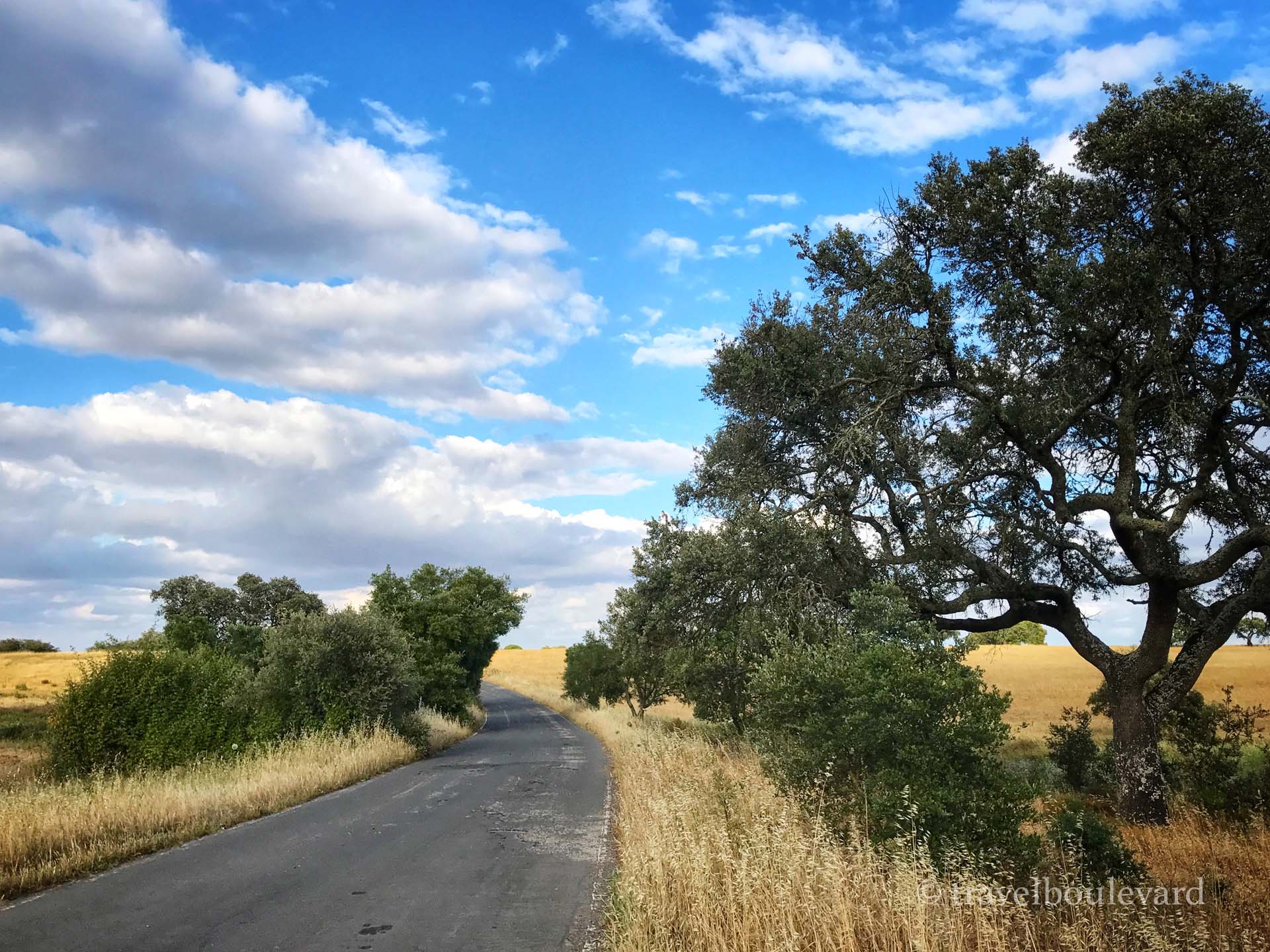
Unlike the Algarve, this isn’t a world of beach clubs and frantic crowds; it’s about peace and taking your time. In Évora, they are currently working hard to get everything ready for its role as European Capital of Culture in 2027, but chances are the locals aren’t losing any sleep over it under their olive trees. Slow and steady wins the race here. But don’t worry: there is plenty to experience.
🚗 How to get to the Alentejo
Accessibility is a major plus: fly into Lisbon, pick up a rental car, and after a mere ninety-minute drive, you’re in the heart of the region. The contrast is immediate: less traffic, less hurry, and an overwhelming silence. Sometimes you’ll drive for kilometers on dead-straight roads without encountering another soul.
👉 Compare rental cars in Lisbon here (Highly recommended, as this is often where you’ll save the most money).
What to do in the Alentejo: 9 experiences you shouldn’t miss
1. Taste the cuisine (and forget your diet)
The food in Alentejo is high-level farm-to-table cooking. You won’t find overly complicated modern dishes with names that require a dictionary, but honest, simple meals made with love. Freshly baked bread, olives, mushrooms, pork, salted cod, cheeses, and plenty of wine.
I noticed this immediately during my trip. Our first stop was a small restaurant in the middle of nowhere, with a menu that perfectly reflects the region: no fuss, just flavor. I opted for an Açorda à Alentejana: a bread soup with bacalhau(cod), eggs, coriander, garlic, and olive oil.
Guide Ruben explained that people here used to make do with very little, but good food was always sacred. They had to be creative with even the simplest ingredients. Mission accomplished, because that soup tastes anything but poor.
These are the dishes you really shouldn’t skip:
- Açorda à Alentejana: You’ll either love it or hate it, but you have to try this bread soup at least once. It’s the ultimate regional comfort food.
- Porco Preto: The black Iberian pig that feeds on acorns under the cork trees. Order the secretos; the meat is a bit fattier than what we might be used to, but the flavor is unbeatable.
- Sericaia: My absolute favorite. A dessert somewhere between a soufflé and a pudding, served with a candied plum from Elvas. Rich, sweet, and quite addictive.
- Queijo de Azeitao or Castelo Branco: The local cheeses are often sharp and creamy at the same time. I prefer them spread on a piece of local wood-fired bread.
- Amphora Wine: In Alentejo, wine is still aged in talhas (giant clay pots). This technique gives the wine a unique, earthy character. Ask specifically for Vinho de Talha during a vineyard visit; it’s a piece of liquid history in your glass.
Until the 1980s, the Alentejo was known as the breadbasket of Portugal due to its endless wheat fields. When farmers realized that wine was more profitable than bread, many traded their fields for vineyards. Today, you’ll find world-class wines here.
Tip for foodies: The From Farm to Table guide compiles the best culinary routes in Alentejo, featuring 5 main routes and 17 paths along producers who have often been working the land for generations. Tastings are available, and many offer workshops.
My tip: Many of the best spots in the Alentejo look like simple roadside diners from the outside. Don’t be put off by fluorescent lighting or paper tablecloths; these are often the places where the locals eat and where the kitchen is at its most authentic.


2. Living traditions: 3 unique villages
⇒ The Chocalhos of Alcaçovas
On my way to Lake Alqueva, I stop by Chocalhos Pardalinho in Alcaçovas, a small workshop where cowbells — or chocalhos, as they are called here — are still made by hand. Now, I’ve always associated cowbells with Switzerland, but that’s something you’d better not say out loud in the Alentejo.
To be honest, I don’t usually have a burning interest in cowbell manufacturing, but the craft is on the UNESCO List of Intangible Cultural Heritage, which piqued my curiosity. When I walk in, they are busy tuning them. “Every farmer recognizes their sheep or cow by the tone of its bell,” I’m told. “Farmers come by regularly to have their bells retuned.”
That is a sentence I never expected to hear in any context, but here, it makes perfect sense.


⇒ Ceramics from São Pedro do Corval
If you think Alcaçovas is an outlier when it comes to traditional crafts, you clearly haven’t visited São Pedro do Corval. Known as the pottery capital of the Alentejo, this village seems entirely dedicated to a single craft: ceramics. Entire families have devoted their lives to creating pots of all shapes and sizes. You can watch the masters at work, and even join a workshop if you want to get your own hands dirty.


⇒ The world-famous rugs of Arraiolos
Arraiolos is another village with a deeply rooted tradition. Sitting at the foot of an ancient castle, it has been famous for its hand-knotted rugs since the twelfth century. As I walk through the streets, I see men and women busy with their needlework in the doorways.
Not everyone is happy to see a camera nearby, though. These patterns are centuries old and unique, and apparently, they are particularly popular in China. The fear of cheap copies is very real here.

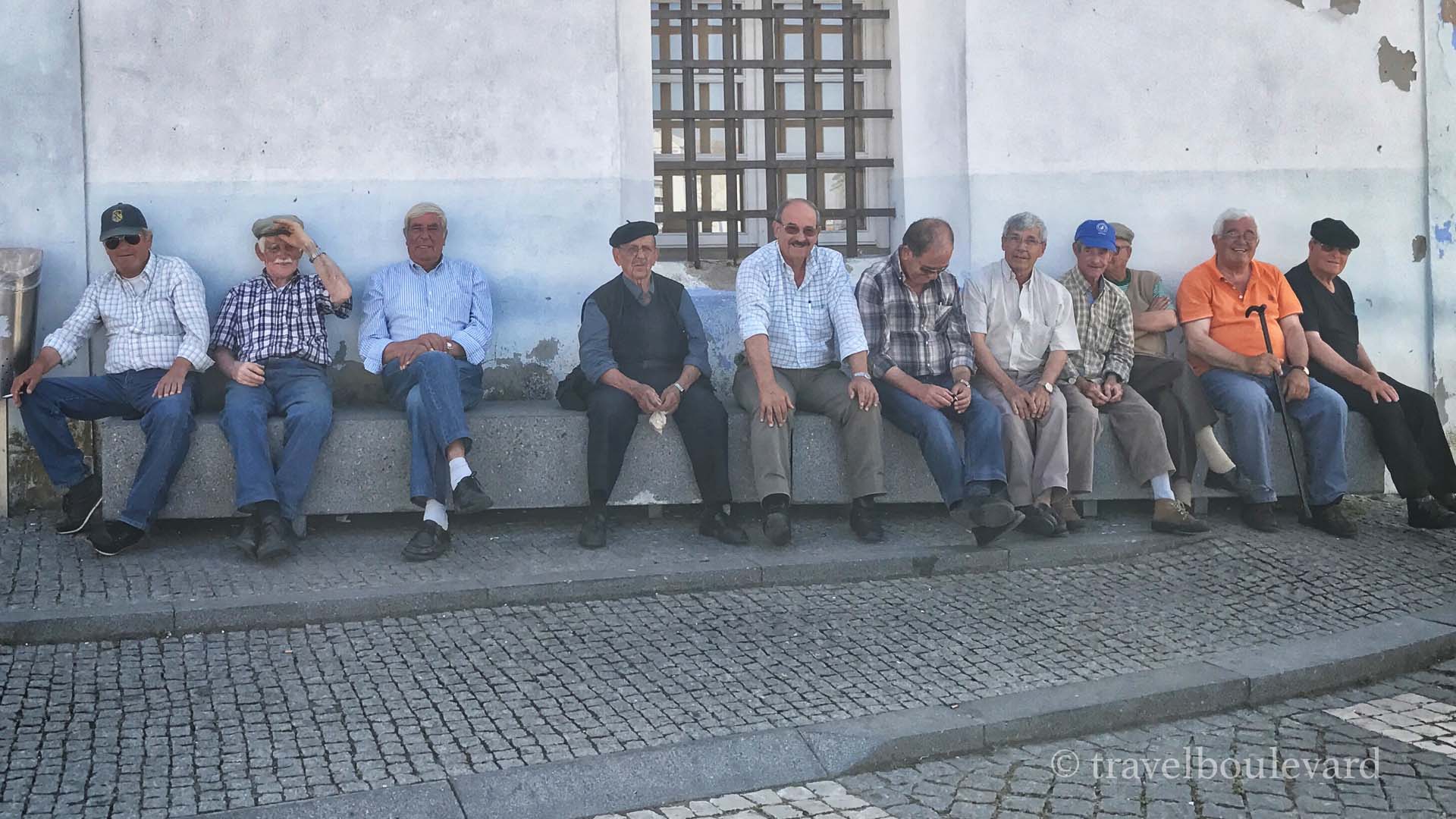
Even if rugs leave you completely cold, Arraiolos is still worth a visit. It has that quintessential charm: a lovely square, cozy side streets, and old men seeking shade in the shadow of the church. They are undoubtedly discussing the town’s latest news, exactly as they should in small places like this.


3. Lake Alqueva: Water sports and sunken wine
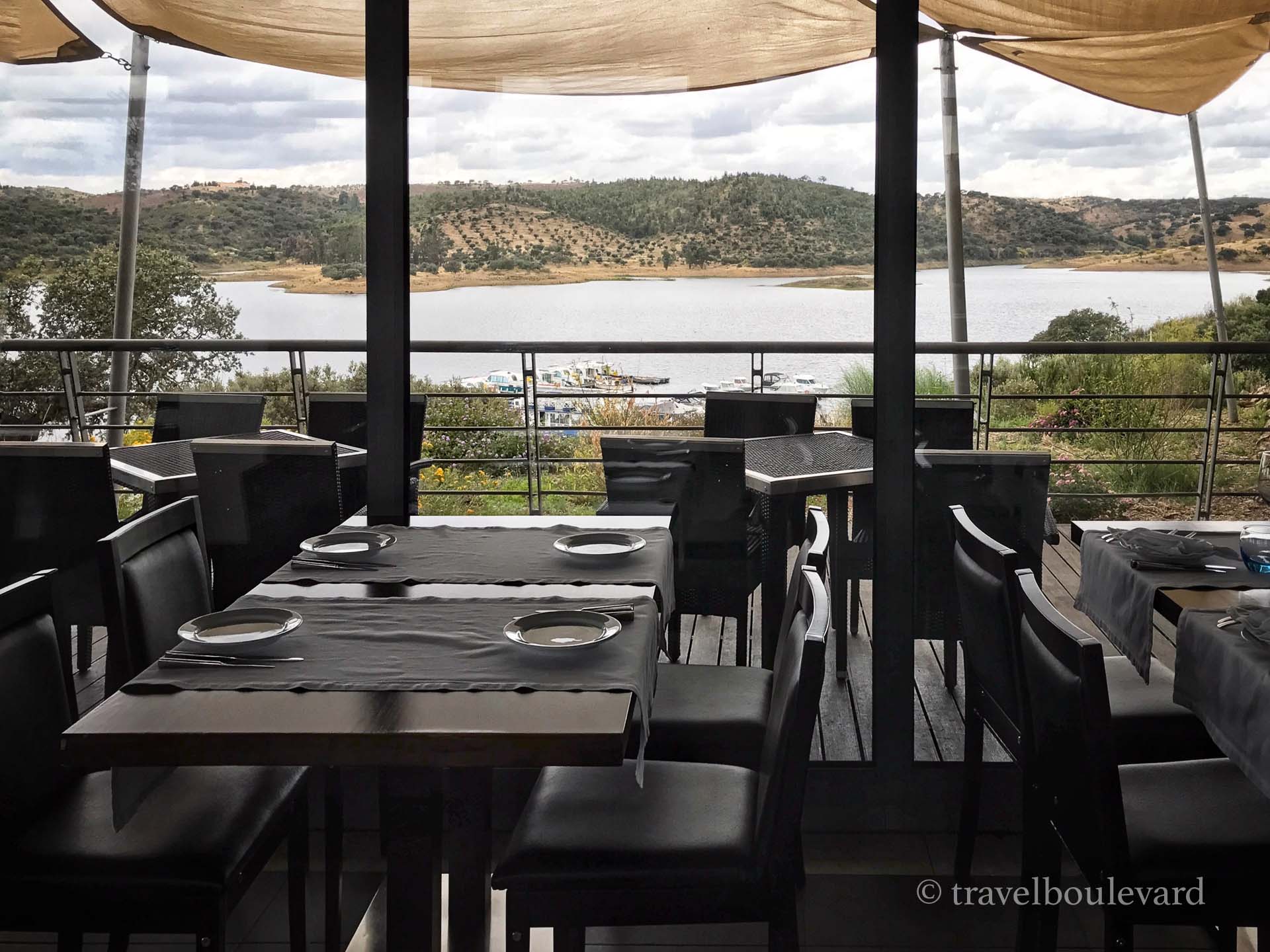
The journey continues to Lake Alqueva. Covering 250 km² with a shoreline of 1,200 kilometers, it is one of the largest artificial reservoirs in Europe. What used to be a parched and arid landscape is now a hub for swimming, kayaking, and waterskiing.
Interestingly, you can also explore the Alentejo from the water. You can visit various villages by boat and simply sleep on board at night under a blanket of stars. You don’t even need a boating license; the boats are easy to handle, or so everyone I asked assures me.
After an enjoyable lunch at the Amieira Marina restaurant — with a view of the lake, naturally — I head out for a boat trip myself. There is something incredibly peaceful about gliding silently across the water.

And then there’s the surprise lurking beneath the surface. “There’s a real treasure at the bottom,” Ruben beams, barely hiding his enthusiasm for wine. On the floor of the lake, barrels of Conde d’Ervedeira are left to age for about six to seven months. Don’t let the term ‘water wine’ mislead you: this is a red wine that gains a very distinct character due to the water pressure. It tastes anything but watery.


4. Medieval towns: Marvelous Monsaraz
I wanted to taste that “water wine,” and Monsaraz was the place to do it. “Wow,” was my first reaction—not exactly literary, but very accurate. This medieval hilltop village is surrounded by whitewashed houses, narrow winding streets, and a castle that keeps watch over it all. On clear days, you can see all the way into Spain.

It’s not large, but that is exactly the point. It’s the framed views, the tiny squares, and the way the landscape unfolds on both sides—with vineyards and olive trees on one hand and the blue waters of Lake Alqueva on the other—that make Monsaraz so striking. Moreover, it is one of the oldest settlements in Portugal, and you can feel it; everything still looks and feels authentic.


But I was there for the “water wine,” and Monsaraz is exactly the right place for it. In the middle of the village, you’ll find the Ervideira Wine Shop, a charming little spot run by the Leal da Costa wine family.
Here, you can sample the famous water wine, but they also serve an “invisible wine”—which looks exactly like water but is, in fact, a red wine. The rooftop terrace is worth the visit alone: a glass of wine, a small bite, and that view. You really don’t need anything else.

5. Stargazing: A night under the Dark Sky
In the evening, after checking into the excellent Horta da Moura hotel, I head back toward Monsaraz, but this time I’m not entering the town itself. I have an appointment at the Observatório do Lago Alqueva for some stargazing.
The area surrounding Lake Alqueva is officially certified as a Dark Sky Reserve (or Starlight Tourism Destination), covering an area of approximately 3,000 km². The sky here is exceptionally free from light pollution, and with a bit of luck, you can clearly see the Milky Way. To make the experience even better, lighting in nearby villages is dimmed at night. Stargazing is serious business here.


Guide Nuno from OLA (Observatório do Lago Alqueva) first provides some necessary context — because you actually want to understand what you’re looking at — and then I get to head out to the observation platforms to spot Jupiter and Saturn. I have to admit: seeing those planets shine so clearly does leave an impression. Perhaps I’m becoming a space enthusiast. Or maybe it was the wine in Monsaraz. Hard to say.
Practical tip: Even if it’s scorching during the day, it can cool down significantly at night. Bring a warm sweater; consider yourself warned.
For the dedicated star hunters, a route has been mapped out around Lake Alqueva featuring the best spots to admire the night sky. You can find more info on that route at darkskyalqueva.com.
6. A deep dive into the glass: Tasting the best Alentejo wines
Alentejo is often called the California of Portugal, and that is no exaggeration. They’ve been making wine here since Roman times, though viticulture fell into decline over the centuries. Recently, many neglected vineyards have been restored, and today, Alentejo wines are among the finest in Portugal.
Herdade do Sobroso
After a near-sleepless night — stargazing is great, but you pay for it in sleep — I arrive at the Herdade do Sobroso-estate. Here, you can do more than just spend the night; they offer activities like hot air balloon rides and kayaking on the lake, alongside excellent food and unique wine tastings.
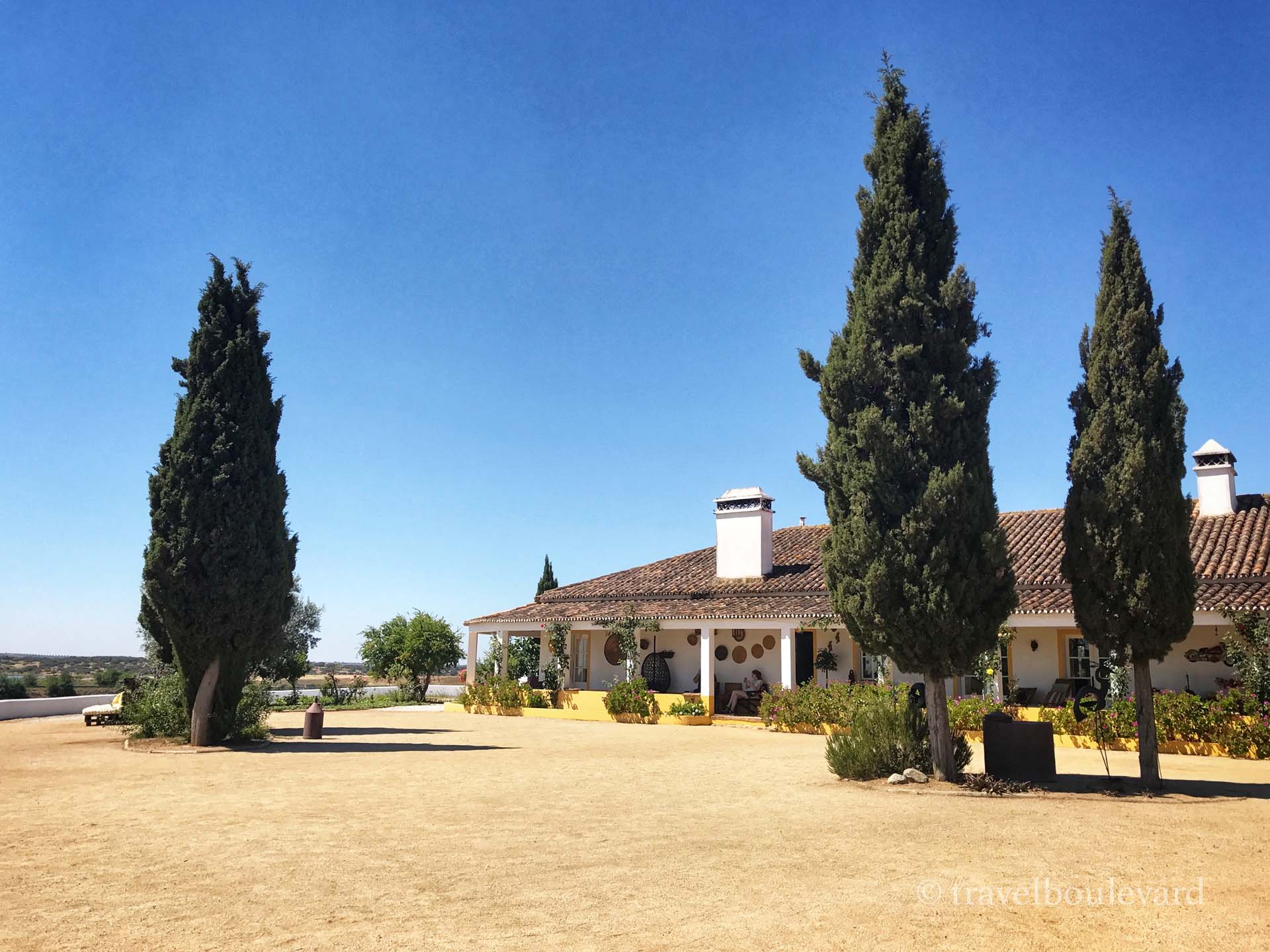


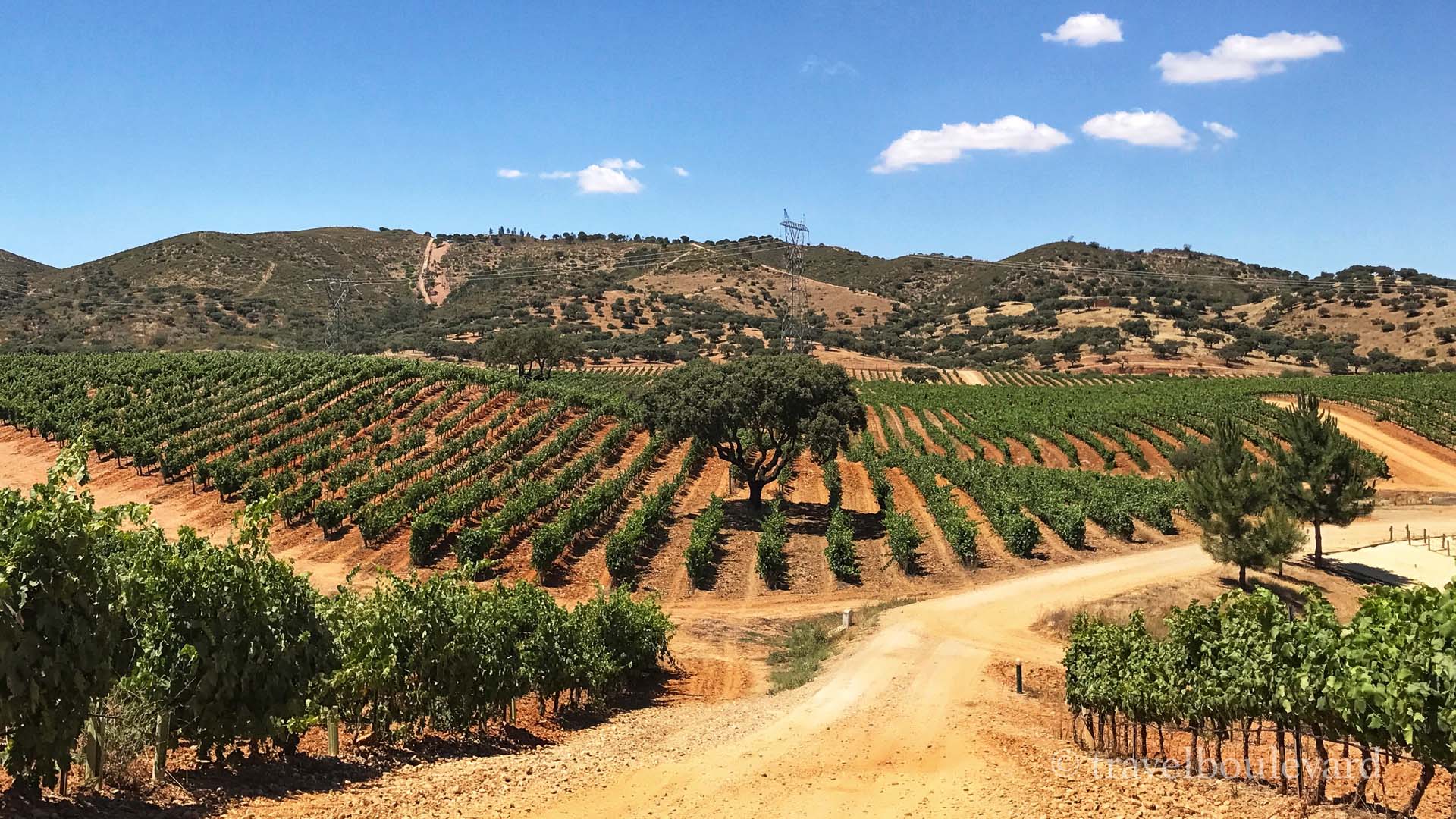
The vineyards sit steaming in the blazing sun; the grapes here have thicker skins and thrive in high temperatures. I taste a white wine that is frankly superb. And good to know: besides wine, they also sell their own homemade jams, olive oil, and honey.
Monte da Ravaqueira
Another recommendation for wine tasting is the massive and spectacular Monte da Ravasqueira estate in Arraiolos. I was given a tour of the vineyards—well, a small section of them anyway, as the estate is roughly the size of the city of Porto. They bottle about 2 million units a year here, which is impressive.
Fun fact: The estate also houses a small carriage museum, a personal hobby of the owner.


7. What to see and do in Évora?
After passing through countless villages and tiny towns, I finally arrive at what feels like a real city: the stylish Évora. This city, with its winding streets and squares, is known as a culinary heavyweight. According to guide Ruben, finding a bad restaurant here is practically impossible.
“Non-existent,” he boasts. “People come from far and wide to eat their fill here, and while prices might be slightly higher than in the rest of Portugal, you’re still paying a very reasonable price for an extensive meal.”

But Évora is also a UNESCO World Heritage site, which means there is plenty to see beyond the dinner table. My first stop is the São Francisco Church and the macabre Chapel of Bones. Built in 1816, it is packed with 5,000 skulls and bones of former monks. At the entrance, I read: Nós ossos que aqui estamos pelos vossos esperamos.
“Our bones are here, waiting for yours,” Ruben translates. I choose to interpret this freely as: we’re all going to die eventually, so we might as well enjoy life while we can. An encouragement, in its own way.


After the Chapel of Bones, I head over to the Roman Temple of Diana. It’s a bit of a misleading name, as it turns out the temple wasn’t actually dedicated to the goddess of the hunt, but to Emperor Augustus instead.

Next to the temple lie the palace and church of the Cadaval family. It is the Duchess herself who shows me around the palace; a remarkably beautiful place, but it’s the palace chapel in particular that leaves me speechless: every single wall is covered in azulejos (blue tiles). It looks stunning.


8. Portugal’s Stonehenge
About 15 kilometers from Évora you’ll find the Cromeleque dos Almendres, one of the largest and oldest stone circles in Europe. This is Alentejo truly off the beaten track—literally, as the access road is unpaved. I wouldn’t recommend driving faster than 20 km/h in a standard car. However, you’ll be bouncing through a landscape filled with cork oaks, which more than makes up for the bumpy ride.

The two stone circles are 7,000 years old (2,000 years older than Stonehenge!) and consist of 95 egg-shaped megaliths. They likely served a ceremonial purpose and were used to celebrate the solstices. It is a contemplative spot atop a hill, offering views of the surrounding ridges. It’s a place to pause for a moment, both literally and figuratively.
9. Surprisingly trendy
The slow rhythm and step-back-in-time feeling that you get so used to after a few days in Alentejo stands in sharp contrast to the stylish accommodations I found along my route. Some were authentic and charming, while others were very modern and hip—like the 4-star Ecorkhotel, for example, where the main building is entirely clad in cork. This eco-hotel features an ultra-modern Spa & Wellness center, and you stay in private bungalows with their own patios.


The hotel is located a 14-minute drive from Évora’s city center and 70 minutes from Lisbon Airport, making it a perfect endpoint for a road trip. Or a great starting point, for that matter. That works too.

This week-long road trip through Alentejo was full of surprises and highlights. The region is so vast that visiting the coast simply wasn’t possible this time: immediately a to-do for our next trip!
⇒ Curious about the unique hotels I stayed at during this journey? Check out the post Unique places to stay in Alentejo.
Find your perfect Alentejo base
Looking for a stylish cork hotel or a quiet vineyard estate? Use the map below to compare prices and locations across the region.
Practical Information 2026
Ready to hit the road? Here is the essential info for your Alentejo adventure this year:
- Getting There: Fly into Lisbon Portela Airport. From there, it’s a smooth 70-minute drive to Évora. Most major European carriers have increased their frequency to Lisbon for the 2026 season.
- Car Rental: Essential. Pick up your car at the airport. Pro tip: Choose a compact car if you plan on driving into the narrow streets of Monsaraz or Évora, but ensure it has good air conditioning, you’ll need it.
- Parking in Évora: The historic center is a maze. Park your car at the Portas da Lagoa lot (just outside the city walls). It’s easily accessible and saves you the stress of navigating streets that were definitely not built for SUVs. Inside the walls, parking is paid (Mon-Fri 8:30-19:30, Sat 9:00-14:00).
- Stay Connected: While most herdades offer excellent Wi-Fi, the rural roads can have spotty reception. Download your Google Maps for offline use before heading into the cork forests.
FAQ: Everything you need to know about Alentejo
When is the best time to visit Alentejo?
The best months are April to June and September to October. During these periods, the landscape is lush and the temperatures are pleasant for exploring. Avoid July and August if you can’t handle the heat; temperatures regularly soar above 40°C, and the landscape turns a scorched golden brown.
Do I need a car to explore the region?
In short: Yes. While there are trains between Lisbon and Évora, the real magic of Alentejo lies in the remote villages, hidden vineyards, and the Dark Sky sites. Public transport is limited in rural areas, so a rental car is essential for a road trip.
Is Alentejo expensive?
Compared to the Algarve or Lisbon, Alentejo is very budget-friendly. You can find excellent local wines for just a few euros and a high-quality three-course meal for a very reasonable price. However, the region also offers high-end luxury eco-resorts and boutique wine estates if you’re looking to splurge.
What is the local food like?
It’s honest, hearty, and rustic. Expect a lot of black pork (Porco Preto), fresh herbs like cilantro, and “Açorda”—a traditional bread-based soup. And of course, Alentejo is Portugal’s breadbasket, so the sourdough bread here is world-class.
How many days do I need?
To see the highlights like Évora, Monsaraz, and Lake Alqueva, you need at least 4 to 5 days. If you want to include the rugged Atlantic coast (the Rota Vicentina), I recommend staying for 7 to 10 days.
Is Alentejo family-friendly?
Absolutely. Alentejo is essentially one giant playground for kids who love space and adventure. Instead of overcrowded theme parks, you’ll find impressive castles in Monsaraz or Marvão where they can play knight for a day.
For the water lovers, Lake Alqueva is a paradise. Since there is hardly any current, it’s a safe spot for children to go paddleboarding, canoeing, or join a boat trip. Furthermore, the region is much quieter than the Algarve, which means you won’t get side-eyed in a restaurant if your offspring is being a bit more enthusiastic than usual. Space, peace, and a healthy dose of fresh air; often, that’s all a family holiday needs.
Ready for departure?
Alentejo is too vast and too striking to capture in a single visit. Once you’ve mapped out your route, you’ll naturally want to stay somewhere just as unique as the region itself.
Craving more Portugal? On my Portugal overview page, you’ll find all the inspiration and stories you need for your next trip.
Looking for a unique place to stay? I’ve gathered my favorite discoveries, from sleeping among the cork trees to design hotels immersed in nature, in my article on Unique accommodations in Alentejo.
Combining your road trip with the city? Most travelers start their adventure in the capital. Check out all my insider tips for visiting Lisbon here.
The Fine Print: My trip to Alentejo was organized in collaboration with the local tourism board. However, all opinions, photos, and questionable driving decisions remain entirely my own. This post also contains affiliate links; if you use them to book your stay, you’re supporting this blog without paying a cent extra. It’s a win-win that allows me to keep sharing honest travel advice with you.


