

 Italy
Italy
City Trip to Verona: What to See, Do, and Experience in Italy’s Most Romantic City
Verona is one of those cities that is often underrated. Many travelers see it as a quick stop between Venice and Milan, or merely as the backdrop to Romeo and Juliet’s love story. However, those who linger will discover something entirely different: an elegant city where Roman history, architecture, gastronomy, and the Italian “art of living” blend effortlessly.
Unlike some other Italian cities, Verona feels compact and manageable. Everything is within walking distance, the historic center is a UNESCO World Heritage site, and the atmosphere is noticeably less rushed. This makes Verona perfect for both a multi-day city trip and an extensive day visit.
In this guide (2026 update), I will take you through Verona as you truly experience it: featuring the must-see highlights, but also hidden gems, practical tips, logical itineraries, and my honest take on what is worth your time—and what isn’t.
- 1. Why Verona is the Perfect City Trip
- 2. How Many Days Do You Need?
- 3. The Most Beautiful Sights in Verona
- 6. Frequently Asked Questions about Verona
1. Why Verona is the Perfect City Trip
Let’s be honest: Verona is no longer an undiscovered gem. Every year, millions flock to the city to admire Juliet’s balcony or catch an opera at the Arena. On a sweltering afternoon in peak season, those spots can be shoulder-to-shoulder. If you aren’t prepared for it, that Italian charm can quickly feel like one big communal sweat session.
However, what sets Verona apart from giants like Venice or Rome is that the crowds tend to stick to a few specific landmarks. If you wander toward the San Zeno district or seek out the banks of the Adige River, you’ll find a version of Verona where locals still read their newspapers over an espresso and daily life carries on at its own pace.
The bottom line: Verona is touristy, but if you’re willing to look beyond the usual highlights, you can still find an authentic experience.
An extra bonus: Verona is strategically located for exploring further afield. You could easily linger here for a week without a second of boredom. Thanks to high-speed train connections and its proximity to the mountains and lakes, Verona is the perfect home base for anyone wanting to see more of Northern Italy.
2. How Many Days Do You Need?
While you could technically “do” the main sights in one long day, you’d be selling the city short. The real joy of a city trip is having the time to wander, linger in a piazza, and explore beyond the city walls. The breakdown below will help you plan a realistic itinerary.
Verona in 2 Days: The Essentials
Two days is the absolute minimum for a first taste of the city. It gives you just enough time to hit the heavy hitterswhile leaving room for some much-needed dolce far niente—blissful idleness with an Aperol Spritz in hand.
In 48 hours, you’ll see the city transform from a bustling tourist hub by day into an atmospheric beauty by night. Here’s a realistic plan:
- Arena di Verona and Piazza Brà: The starting point of almost every visit.
- Piazza delle Erbe and Torre dei Lamberti: For the vibes and the bird’s-eye view.
- Casa di Giulietta (Juliet’s House): A quick stop at the balcony (whether you go inside or not).
- A riverside stroll & Ponte Pietra: The ultimate route for your best photos.
- Aperitivo and dinner: Spending your evenings in the historic center.
Your Hotel: In the Heart of the City If you only have two days, you don’t want to waste time on buses or long walks.
- Budget-friendly top pick: Hotel de’ Capuleti. A charming spot just outside the main crowds, but a stone’s throw from the Arena. Save your budget for an extra plate of pasta or a glass of Amarone.
- Stylish mid-range: Hotel Mastino. A household name in Verona, practically next to Piazza Brà. You’ll literally roll from the boutiques back to your bed.
- Ultimate luxury: NH Collection Palazzo Verona. Housed in a stunning historic building. You’ll sleep among centuries-old frescoes and Roman ruins.
Verona in 3 Days: Culture, Peace, and Depth
Three days is the sweet spot. You can mix the highlights with quieter corners and experience Verona as a temporary local rather than a “checklist” visitor.
What to add to your program?
- Basilica di San Zeno Maggiore: A fifteen-minute walk from the center, but an absolute must. One of Italy’s most beautiful Romanesque churches.
- Views and greenery: Take time for the Giardino Giusti, a Renaissance garden where even Goethe sought inspiration, or head to Castel San Pietro for the sunset.
- Slowing down: In three days, you have room for a long lunch without having to skip a museum visit. This is slow travel at its best.
Where to Stay:
- Romantic: Relais de Charme Il Sogno di Giulietta. This hotel is literally inside the courtyard of Juliet’s House. Once the gates close to the public, you’ll have the balcony almost all to yourself.
- Luxury and Design: Escalus Luxury Suites. Spacious, modern suites with personalized service.
- Your Own Place: Lady Capulet Apartments. Industrial-chic apartments that are absolutely picture-perfect.
Verona in 4 Days (or More): The Ultimate Hub
With four days or more, Verona becomes your home base rather than just a destination.
Your Extra Options:
- Vicenza or Mantua: Two cities often overlooked but bursting with art and history.
- Lake Garda: Head to Sirmione, Lazise, or Bardolino. Within an hour, you can swap marble streets for a lakeside breeze.
- Valpolicella Wine Tasting: Book a tour to a local cantina to see how those complex Amarone wines are made.
- The Dolomites: For fresh mountain air, the iconic peaks are about a 90-minute drive away.
Where to Stay: Treat Yourself to Something Extra
- Just outside the city: Hotel Villa del Quar. An impressive manor house surrounded by vineyards. Ideal if you have a rental car.
- On a hill: Relais Fra’ Lorenzo. Peace, olive groves, and a view that will make you want to stay forever.
- Adults only: Villa Natalia. Within walking distance of Ponte Pietra, featuring private parking and stunning city views.
Prefer to find your own perfect spot? Use the map below. Quick Guide: The Centro Storico (Historic Center) is the best location for first-timers. Borgo Trento is quieter and more local. Budget hunters should look around Porta Nuova, while luxury seekers will find their bliss in the center or on the hills.
3. The Most Beautiful Sights in Verona
One of Verona’s greatest perks is that the main attractions are located close together, making it a dream to explore entirely on foot.
The Must-See Classics
The Arena di Verona: Older Than the Colosseum
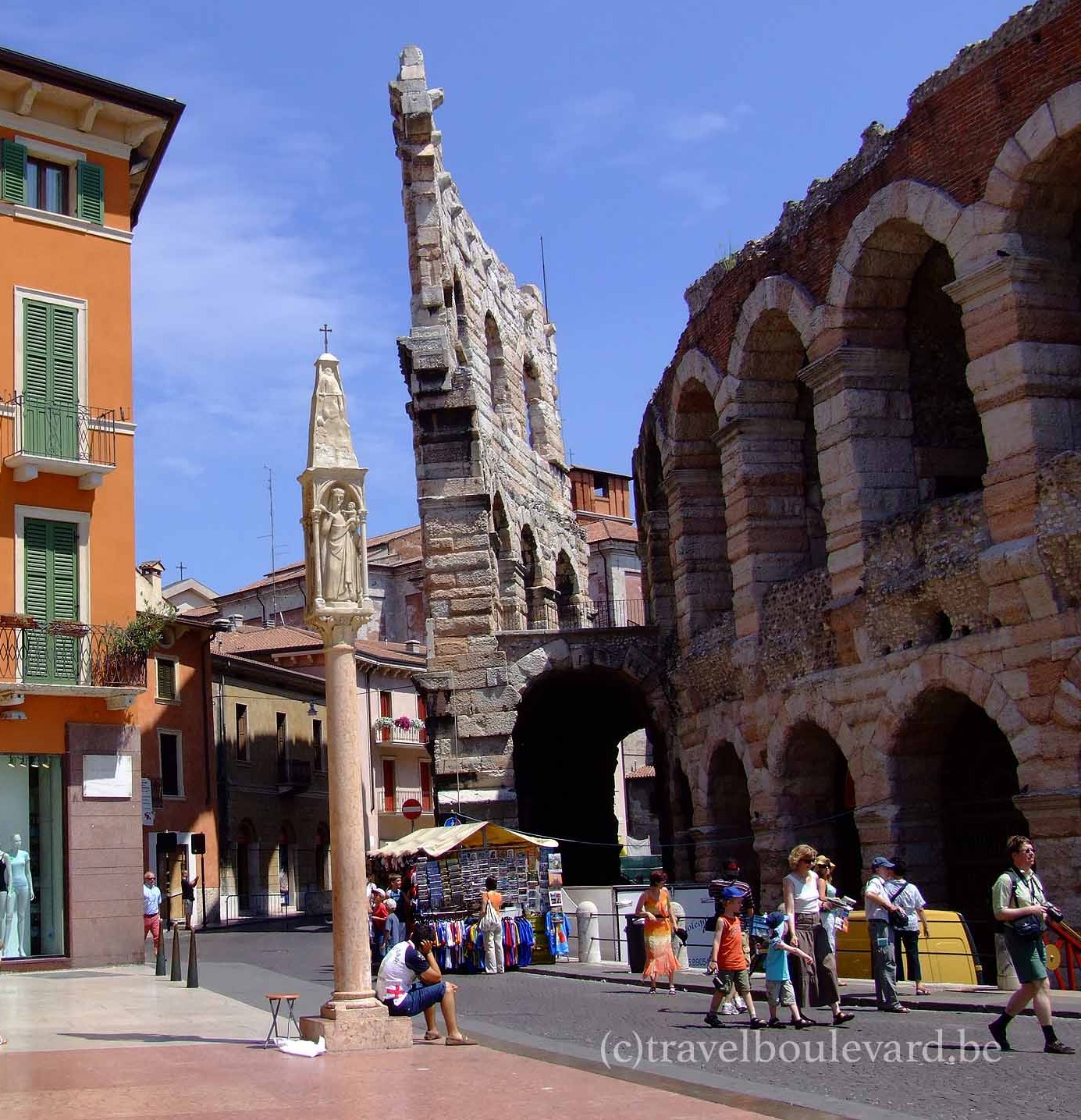
The Arena is the undisputed icon of the city. This Roman amphitheater, dating back to the first century AD, is one of the best-preserved in the world. A fun fact that many visitors miss? It is actually older than the Colosseum in Rome, and its acoustics remain phenomenal to this day.
- By Day: You can visit the monument as a museum. My tip: go early in the morning or late in the afternoon to stay ahead of the largest crowds.
- By Night: The Arena transforms into a magical stage for operas and concerts. A fair warning, though: tickets for popular performances often sell out weeks in advance.
The Squares: Piazza Brà and Piazza delle Erbe
Piazza Brà serves as the city’s grand entrance. It feels open and elegant, with wide terraces and a stunning view of the Arena. While it is undeniably touristy, it remains a lovely spot for that first espresso as the city wakes up.
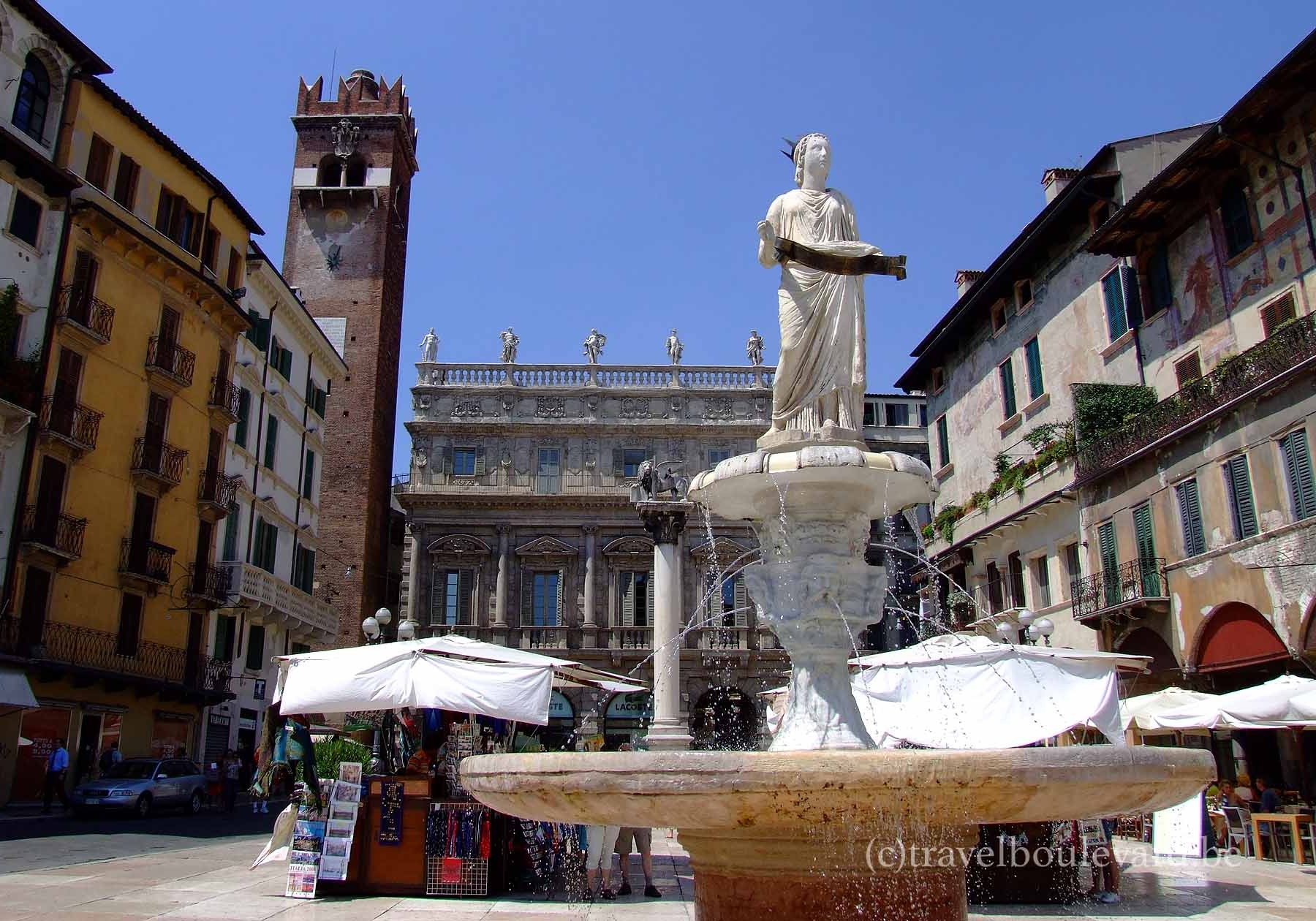
If you wander further into the heart of the city, you’ll find Piazza delle Erbe. Once a Roman forum, it is now perhaps one of the most photogenic squares in all of Italy. The historic facades and the bustling market create that unmistakable Italian buzz.
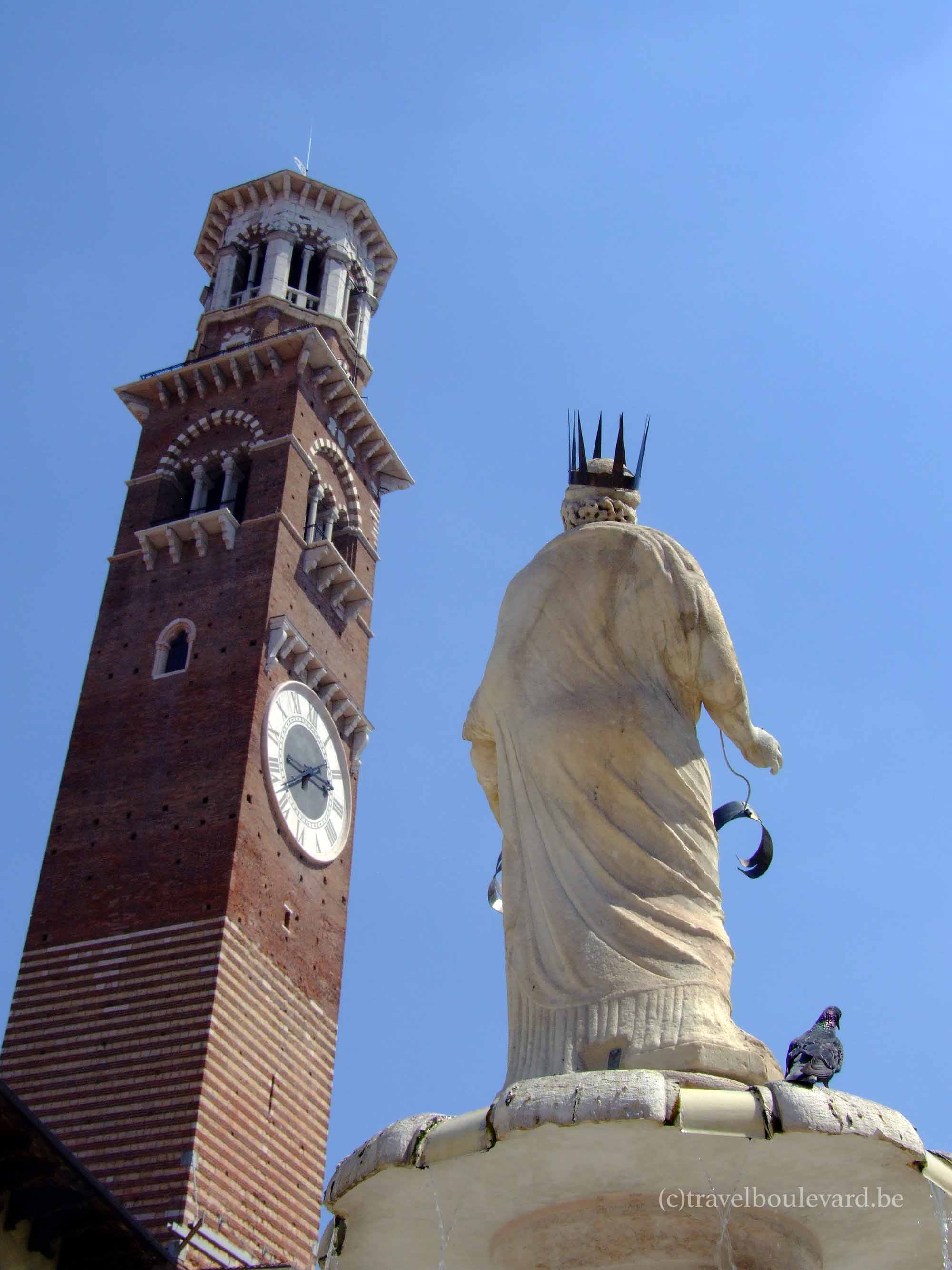
Pro Tip: Look for the Torre dei Lamberti. You can take the elevator (followed by a short final flight of stairs) to the top for a panoramic view over the terracotta rooftops and the winding Adige River.
The Test of the Arco della Costa
As you walk from Piazza delle Erbe toward Piazza dei Signori, you’ll pass under the Arco della Costa. Look up, and you’ll see a whale rib (or a dragon rib, depending on which legend you prefer) dangling from the arch.
The rib has been hanging there since the 18th century. According to local folklore, the bone will only fall when a “pure soul” who has never told a single lie walks beneath it. Given that it’s still hanging there after all these centuries, it probably says enough about the rest of us.
The Down-to-Earth Facts: The true story is slightly less magical but very clever. The rib was likely a sign for a medieval pharmacy or spice shop. It was meant to lure in customers with exotic souvenirs from distant lands, proving they stocked only the most extraordinary ingredients. A classic case of marketing avant la lettre.

Juliet’s Balcony
You can’t visit Verona without a nod to romance. Casa di Giulietta—Juliet’s House—is the main draw for many visitors.
- My Tip: Arrive as early as possible. The atmosphere is at its best just as the sun begins to peek over the courtyard walls.
- A Smart Visit: Because everyone wants a slice of this romance, Verona now uses a smart reservation system. If you want to stand in the courtyard or admire the balcony up close, be sure to book your time slot online in advance.
Across the River: Ponte Pietra and Castel San Pietro
The Ponte Pietra is the city’s oldest bridge and, in my opinion, the most atmospheric spot for a photo. Cross it at sunset and take the funicolare (cable car) up to Castel San Pietro. The castle terrace offers the absolute best panorama of the city—the perfect place to end your day as the city lights begin to twinkle below.
If You Have More Time
If you only check off the sights above, you’re only seeing a fraction of what Verona has to offer. Just off the beaten path lie spots that are every bit as fascinating.
Basilica di San Zeno Maggiore
For me, this is one of the most beautiful churches in Northern Italy. Since it’s a fifteen-minute walk from the center, many day-trippers skip it. You’ll find an impressive bronze portal and a peaceful, almost village-like atmosphere on the square.
The Giardino Giusti
This Renaissance garden on the eastern side of the city is an oasis of calm. With its manicured hedges, towering cypresses, and classical statues, it’s the ideal escape from the city bustle. Climb to the top terrace for a surprising view of the skyline.
The San Zeno District: The Locals’ Verona
San Zeno is much more than just its famous basilica. The moment you step outside the church, you’re in a neighborhood with a real identity. No rows of tour buses here—just small squares and neighborhood cafés where the morning paper is still a fixture on the tables.
- Why go? The vibe is much more relaxed than around the Arena. You’ll find artisanal shops and trattorias that still cater to the locals. It’s the perfect place to wander aimlessly and see how Veronese life actually unfolds.
Walking Along the Adige
The Adige River shapes the city, but it also acts as a natural buffer against the crowds. I highly recommend the eastern bank. Here, you can walk under the trees, right by the water, through residential areas that are surprisingly quiet. It’s the place to hit “pause” and hear the city sounds fade away.
Palazzo Maffei: Where Classic Meets Modern
Located right on the busy Piazza delle Erbe, Palazzo Maffei is a bit of an outlier. It combines a stunning historic building with a massive collection of modern and contemporary art.
- The Insider Tip: Since the museum is relatively new, most people walk straight past it on their way to the market stalls. That’s a mistake—the collection is surprisingly good, and the rooftop terrace offers a unique perspective on the square.
The Climb to Santuario della Madonna di Lourdes
Everyone goes to Castel San Pietro, but if you really want to stretch your lungs, keep going to this sanctuary atop the hill.
- The View: It’s a brisk hike, but the panorama over the city and the surrounding vineyards of Valpolicella is even wider and much quieter than at the castle. In 2026, this remains the favorite spot for photographers looking to capture the city without a sea of heads in the foreground.
- The Reward: Since the building was once a fort and is now a place of silence, the energy is completely different. You don’t just see the center; you see the rolling hills stretching toward Valpolicella.
Things to Do In and Around the City
You can spend your whole day walking from monument to monument, but certain experiences give you that extra bit of context you won’t find in a history book.
City Walk: Guided or Solo?
In a city like Verona, you are literally walking on top of history. It’s one of the few places where Roman ruins, medieval walls, and Renaissance palaces are all packed into a tiny area. A bit of background info here isn’t just a luxury—it’s what makes the city come alive.

Why a Guide is a Great Idea: A good local guide tells you much more than just dates and years. They separate fact from myth (especially the ones surrounding Romeo and Juliet) and point out the hidden details behind the facades that you’d otherwise walk right past. There are also more and more themed walks focusing on things like Roman architecture or the city’s culinary history.
Going Solo: If you prefer setting your own pace, Verona is perfectly easy to discover on your own. The city is compact enough that you can wander off and get “lost” without actually losing your way. And the stories behind the walls? You can always fill those in with your own imagination.
Wine Tasting in Valpolicella
If you have half a day to spare, head out of the city toward the vineyards of Valpolicella. This is Verona’s backyard and the birthplace of the famous Amarone wine. Visiting a local winemaker gives you an instant understanding of why this wine holds such a prominent spot on every menu in the city.
Verona by Bike
Verona is flat and compact, and a bike tour will take you to spots the average tourist rarely reaches, such as the green paths along the Adige River. In just two hours, you’ll see much more of the different neighborhoods than you ever could on foot.
Opera or Concert in the Arena: A Night in History
An evening performance in the Arena is the highlight of many people’s trip to Verona. Even if you’re not an expert and don’t know your aria from your overture, the setting is breathtaking. As soon as the sun sets and thousands of candles light up the ancient stones, you’ll realize exactly why this stage has remained legendary for two thousand years.
- Practical Tip: Demand for tickets is huge, especially during the summer season. Check the schedule months in advance and book your seats online.
- My Advice: Bring a small cushion or rent one on-site; those stone benches are not exactly kind to your backside after a few hours of opera. Also, check the dresscode: for the premium seats, a certain level of elegance is expected, but on the stone steps, comfort is the name of the game.
Verona from the Water: The Adige Boats
Don’t expect massive tour boats with hundreds of passengers here. The Adige is shallow and has a steady current, so the boats you’ll find are small, agile, and often electric.
- The Electric Sloop (with skipper): Recently, small-scale, eco-friendly sloops have started running loops between the historic bridges. You don’t have to steer yourself; you ride along with a guide. It’s the most relaxing way to admire the Ponte Pietra and the Castelvecchio Bridge from below. You’ll see the city walls and ancient watermills from a perspective you simply miss from the quay.
- When to go? Book a spot just before sunset. The reflection of the city’s red bricks in the water is at its most beautiful then.
- Pro Tip: These boats only run when the water level allows. After heavy rainfall in the mountains, the current can be too strong, and the boats will stay docked. Be sure to check the status on the day of your visit.
4. Local Cuisine: Where and What to Eat?
Verona has a hearty cuisine deeply rooted in the region. Risotto all’Amarone is the dish you absolutely have to try at least once.
- Avoid the Traps: Walk right past the restaurants with multilingual menus directly on Piazza Brà. You’ll find the truly great trattorias in the side streets of the San Zeno or Veronetta districts. There, you’ll eat alongside the locals at fair prices.
- Do the ‘Aperitivo’: Instead of heading straight to dinner, start your evening with cicchetti (small snacks) at a wine bar.
- Try a Food Tour: This is an efficient way to get to know Verona’s kitchen without the endless searching. You’ll usually taste local wines, cheeses, and regional cured meats. A cooking workshop is another fun way to get hands-on and “taste” the city.
5. Practical Tips for Your Verona City Trip
Best Time to Visit
Verona shows a different face every season. The trick is finding the balance between good weather and the crowds.
- Spring and Autumn (May, June, and September): This is absolute prime time. Temperatures are pleasant (around 22°C to 25°C), the terraces are buzzing, and the Valpolicella vineyards are stunning. It’s busy, but not overwhelming.
- Summer (July and August): Hot, humid, and crowded. This is peak season for the Opera Festival. If you’re coming for the opera, this is your moment, but be prepared for temperatures above 30°C and long lines.
- Winter (November to March): An underrated time to visit. Verona can be shrouded in mist, giving the city a mystical, almost cinematic feel. In December, the Christmas markets on Piazza dei Signori are beautiful. It’s cold, but you’ll have the city (almost) to yourself.
Getting to Verona
- By Air: Verona Villafranca Airport (VRN) is just 15 minutes from the center. An Aerobus shuttle runs to the Porta Nuova train station every 20 minutes.
- By Train: Verona is one of Italy’s major rail hubs. High-speed trains (Frecciarossa) can whisk you to Milan or Venice in just over an hour.
Getting Around
- On Foot: The historic center is compact and largely car-free. Your legs are your best mode of transport.
- Public Transport: The ATV city buses are efficient. With the Verona Card, you ride for free, which is handy for neighborhoods slightly further out, like San Zeno.
- By Car: My advice? Leave the car behind. The center is a ZTL (Limited Traffic Zone), and tourists will get a hefty fine for entering. Park in a garage on the edge of town (like Parcheggio Arena) and walk the rest.
Verona Card: Yes or No?
For €20 (24 hours) or €25 (48 hours), you get access to the Arena, the Torre dei Lamberti, and the major churches, plus free use of the buses. You’ll break eve
6. Frequently Asked Questions about Verona
Is Verona expensive?
Verona isn’t exactly a budget destination, but compared to Venice or Milan, it’s quite reasonable. It all depends on where you choose to open your wallet.
Accommodation: Prices in the historic center are steep. However, because the city is so compact, you can easily stay just outside the old city walls. This often saves you around 30% on room rates while still being within walking distance.
Food and Drink: On Piazza Brà (near the Arena), you’ll pay a “tourist tax” in the form of an expensive espresso or a pricey lunch. But walk ten minutes into the Veronetta or San Zeno districts, and you’ll find excellent pasta for between €12 and €16. A glass of local Valpolicella wine there often costs no more than €5.
Is Verona more romantic than Venice?
This is the eternal debate. My honest opinion? Verona is a real, living city. Its romance is more subtle: the pink marble streets, the hidden courtyards, and the sunset views from the hills. It feels more intimate because “real” people still live here. If you love a city that buzzes but still offers quiet alleys just for you, Verona wins on points. Venice is a movie set. It’s breathtaking, but it can feel a bit surreal, and the intense crowds (and the canal smells in summer) can definitely put a damper on the romance.
Is the tap water drinkable?
Yes, absolutely. The fountains throughout the city aren’t just decorative; the water is of excellent quality. In this day and age, buying plastic bottles is a bit of a faux pas. Bring a reusable bottle and refill it for free.
Do they speak English?
In shops, hotels, and restaurants in the center, most people speak English well. In the authentic trattorias in the outer districts, you might need to use your hands and feet to communicate, but that’s all part of the charm.
Let’s be real: at some point in Verona, you’ll find yourself in a shoulder-to-shoulder crowd on Piazza Brà. You’ll probably roll your eyes at the price of a lukewarm beer near the Arena, and yes, you’ll take that inevitable photo of thatfamous balcony.
And that’s okay. Because Verona is also the city where, just three streets away, you’ll suddenly find yourself on a terrace surrounded by locals loudly discussing their day over a three-euro glass of wine. It’s a city of contrasts: high-end and surprisingly affordable, historically heavy and student-vibe light.
And that whale rib? It’ll still be hanging there tomorrow. Unless, of course, you happen to be the one person who has never told a lie.
Want to know more about Verona? Check out my post on Visiting Juliet’s House (a story of love and deception).
Transparency first: Some of the links in this article are affiliate links. This means we earn a small commission if you book something, at no extra cost to you. We only recommend places we truly stand behind (and where we haven’t been kicked out by the doorman). Our opinion remains 100% honest and unfiltered.
Comments are closed.



Such and inspiration you are and so is your article. It truly inspired me to travel this year and i am thinking of going Paris this year and if i get enough time i would surely visit Verona and have some awesome experience there.
Thanx for sharing your awesomeness, keep traveling and sharing.
Thank you so much Rana!
Ohhhh I love Verona!!!! Your photos are breath taking and I agree with all your recommendations 😀
I also must admit: I am in love with your blog Nina! It is a great pleasure to have found you!
Happy new year!
Allane
Oh, thank you so much Allane! Happy 2015!! 🙂
I keep thinking I should go to Verona for a weekend, I will definitely go back to your post when I decide to visit it. 🙂
Great photos! I took the elevator up to the top of the tower as the stairs were a little too much for me. 🙂
Tip: If you have a student id, you can go up for half price!
Gorgeous city and captured with beautiful photos. Verona is one of those Italian cities that has always captured my imagination but as yet have never been to.
I agree with your choices, especially the opera – it is quite something to sit in the arena at night time and listen to the music (it’s a great visual spectacle as well). Hope you don’t mind if I put a link in your comments but this is an article I wrote about Romeo and Juliet in Verona – http://www.bewitchedbyitaly.co.uk/2013/10/searching-for-romeo-in-verona.html.
Nice story about the whale rib. I guses it will never fall with all those people going around saying it’s the rib from a dragon!
Also love the picture of a Piazza Brà – looks like such a relaxed atmosphere.
What a charming town to sit in a cafe and people watch. I love the whale bone folk tale and never realized Verona was where the story of Romeo and Juliet was born.
Looks like a really wonderful place to explore, get lost in, then do a little people watching over a coffee. There’s so much of Italy that I’ve yet to say. Hope I make it here before too long. Lovely photos by the way.